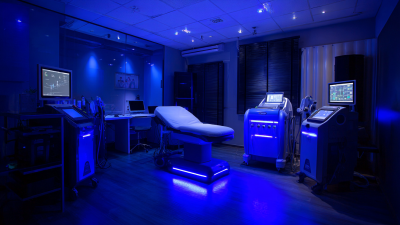
So, a 10600nm Co2 Laser—basically the kind you hear about with carbon dioxide lasers—works right around that 10.6-micrometer mark. And because that wavelength gets soaked up really well by a bunch of nonmetallic materials, these lasers turn out to be super handy for all sorts of things like cutting, engraving, marking, and even some medical stuff too. I came across MarketsandMarkets’ report on laser technology, which does a decent job tracking how lasers are being adopted in industrial and medical settings. And if you want the nitty-gritty on how CO2 lasers actually work, the RP Photonics Encyclopedia has you covered. All that context is helpful, sure, but it doesn't really confirm what any specific manufacturer or product actually claims.
Look, China’s laser-equipment scene is a mixed bag. You’ve got established builders who’ve been around for a while, and then newer companies that focus on a pretty narrow range of products. One might sell a compact desktop engraver, another pushes a high-power cutting machine, and maybe someone else offers a fractional treatment platform—but these aren’t interchangeable, not by a long shot. So when you’re comparing, don’t get dazzled by the headline numbers. Dig into output power, pulse control, beam quality, cooling design, service coverage, and documented safety features. And always ask to see the test conditions behind the specs. That’s where the real story is. You know, no matter how fancy that brochure looks, it’s not going to tell you how steady that laser really stays hour after hour on a long production shift.
So, this guide—titled “China Top 10 10600nm CO2 Laser Manufacturers 2026”—basically walks you through ten companies that might be worth a closer look. But hey, don’t treat this list like some official ranking or certification. It’s really just a starting point for your own research, you know? Honestly, the term 10600nm Co2 Fractional Laser can get a little confusing—sometimes it refers to a specialized medical platform, not just the laser itself. So if you're digging into this, it's worth double-checking the exact wavelength, what it's actually meant for, and any supporting documentation you can find. Some specs are just hard to compare, and I think that's something worth admitting. Before you commit to buying anything, it’s worth double-checking the latest models, warranty details, and after-sales support straight from each manufacturer. You know, just so you don’t get any surprises later.
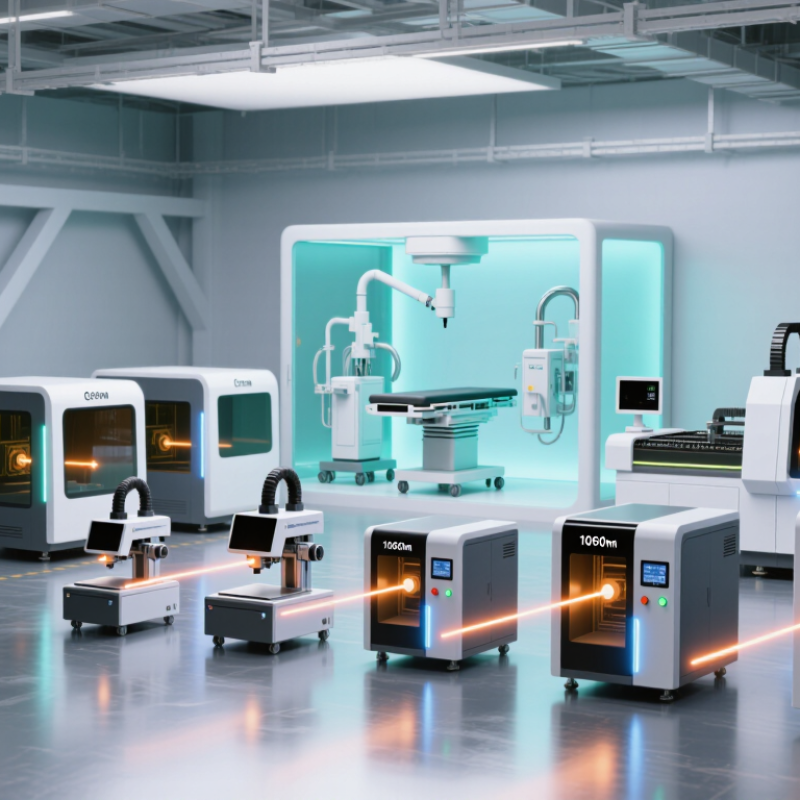
Understanding 10600 nm CO2 Laser Technology
A 10,600 nm CO2 laser produces infrared light that many organic materials absorb efficiently. The wavelength is often written as 10.6 micrometres. That small detail matters. Absorption can create rapid heating, so beam power, pulse duration, and spot size all affect the result. On wood or acrylic, a focused beam may cut a narrow path; on coated materials, heat can discolor nearby areas.
A typical system uses a gas-filled discharge tube, a resonator, and mirrors to generate and guide the beam. Tube construction influences output stability, while alignment and cooling affect repeatability during longer work cycles. Operators should check measured output, beam quality, and duty-cycle limits rather than rely on a headline power rating alone. The phrase Metal Tube 10600nm Fractional Co2 Laserappears in searches, but it is not a complete technical specification. Ask what “fractional” describes in that particular system. Marketing language can be fuzzy. Even well-built equipment may behave differently with another lens, material, or aiRflow setup, so practical testing remains necessary.
Industrial and Medical Applications of 10600 nm CO2 Lasers
A 10,600 nm CO2 laser emits infrared energy that water-rich materials absorb efficiently. This interaction makes the wavelength useful across industrial processing and selected medical procedures.
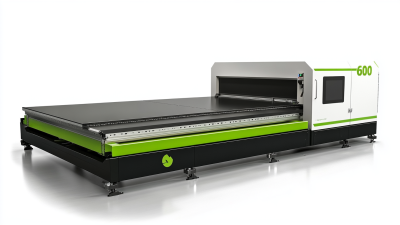
In workshops, systems may cut or engrave acrylic, wood, paper, and some textiles. A focused beam can leave a narrow kerf, while slower passes often deepen engraved lines. Settings depend on material thickness, surface finish, and ventilation.
Material matters. Plastics with unknown additives may release harmful fumes, so operators should verify material data and use suitable extraction. Beam alignment, lens cleanliness, and consistent focus also affect edge quality. Small changes can alter the result. That is easy to overlook.
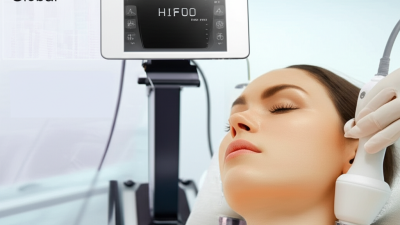
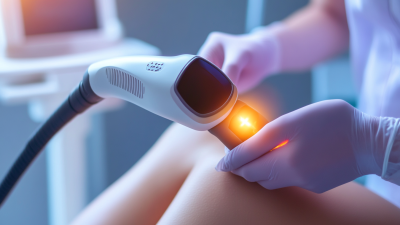
In clinical settings, 10.6 μm CO2 lasers are used by trained professionals for procedures such as tissue cutting and skin resurfacing. Water absorption enables controlled tissue interaction, but treatment depth and healing vary by patient and technique. Protective eyewear, device maintenance, and careful parameter selection are essential. The technology is capable, not automatic; outcomes require judgment, and real-world results deserve ongoing review.
Key Criteria for Evaluating Chinese CO2 Laser Manufacturers
A Chinese CO2 laser manufacturer should be judged by measured performance, not headline wattage. At 10,600 nm, small differences in focus, pulse delivery, and beam stability can change the cut or treatment result. Ask for test data taken at the workpiece, including output power, beam profile, and repeatability. ISO 11146-1:2021 sets methods for measuring laser beam widths and divergence, giving buyers a useful basis for comparing test reports. A brochure alone is not enough.
Check thermal management and operating consistency during extended runs. Request a demonstration using your material and the intended settings; inspect the edge, kerf, and variation across repeated passes. For a 10600nm 40w Fractional Co2 Laser Machine, ask how pulse energy and spot size are verified, and whether calibration records are available. IEC 60825-1:2014 covers laser product classification and safety requirements, so review the supplier’s relevant safety documentation. One detail is easy to miss: quoted tube power may not equal usable power at the processing head.
Tips: Ask for dated test results, service response times, and a written warranty. Compare like with like. A polished sample can still hide inconsistent production performance.
China’s Top 10 10600 nm CO2 Laser Manufacturers in 2026
China’s Top 10 10600 nm CO2 Laser Manufacturers in 2026 can be compared by more than catalogue specifications. At this wavelength, beam delivery, pulse control, and cooling design affect everyday operation. Ask manufacturers for measurable output data and clear test conditions. Details matter. A polished brochure is useful, but it cannot replace a technical discussion with the engineering team.
For systems described as fractional medical CO2 lasers, examine how the company documents energy settings, scanning patterns, and operator safeguards. Request service intervals, spare-parts availability, and training details in writing. The phrase 10600nm Rf Tube Fractional Medical Co2 Laser may appear in product searches, but buyers should confirm the actual tube type and configuration rather than rely on wording alone. Check applicable device documentation for the intended market. Do not assume one certificate covers every region.
A practical comparison can include production experience, quality-control records, response times, and support after installation. If possible, review a sample treatment pattern on a suitable test material and inspect how consistently the system delivers it. Ask what happens when output drifts or a component needs replacement. Some information may remain difficult to compare across suppliers; that is worth acknowledging, not glossing over. A ranked list is a starting point, not proof of performance.
China’s Top 10 10600 nm CO₂ Laser Manufacturers in 2026
Wavelength reference for common CO₂ laser emission lines
CO₂ lasers commonly operate near 9.3 μm and 10.6 μm (10,600 nm). This chart provides wavelength context only; it does not rank manufacturers or represent company-specific data.
Comparing Manufacturers by Products, Capabilities, and Support
Comparing China’s top 10 manufacturers of 10600 nm CO2 lasers in 2026 requires more than comparing advertised power. Buyers should examine the complete product range, including laser sources, cooling systems, control interfaces, and options for integration. A clear specification sheet should state output power, operating mode, beam characteristics, and expected service intervals. Small details matter.
Capabilities are easier to judge with evidence. Ask for test reports, sample-processing results on comparable materials, and details about production quality checks. Ask for proof. A supplier’s ability to customize a system may be useful, but changes to optics, software, or cooling can affect performance. Request written confirmation of the final configuration and acceptance criteria before ordering.
Support also separates a workable supplier from a dependable one. Compare response times, troubleshooting channels, spare-parts availability, warranty terms, and the training provided to operators. A practical test is to ask how the support team would diagnose unstable output or a cooling alarm. The answer should be specific, not just reassuring. Online claims can be incomplete, and service quality may vary by region; verify references where possible. Even a polished demonstration does not guarantee identical results on your materials, so arrange a controlled sample test before making a decision.
China’s CO2 Laser Industry: Market Trends in 2026
China’s CO2 laser industry in 2026 is shaped by demand for reliable output, practical maintenance, and clearer technical documentation. Buyers are looking beyond headline power ratings. They increasingly compare beam consistency, pulse control, cooling performance, and the availability of replacement parts. For fractional systems, even small differences in energy delivery can affect treatment uniformity and operating routines. A specification sheet helps, but it cannot replace careful testing.
Tips: Ask for repeatability data and a clear maintenance schedule. Check cooling requirements, tube life assumptions, and service response times. Compare like with like.
Manufacturers are also responding to tighter expectations around energy use and production traceability. These priorities matter to clinics and distributors managing equipment over several years, not just at installation. The phrase Rf Tube 10600nm Co2 Fractional Laser Machine may appear in product searches, but the label alone says little about build quality or real-world performance. Request a demonstration using consistent settings, and review how results are measured. Some purchasing decisions still rely too heavily on peak output; that is an easy mistake to make. Practical support and dependable components can matter more than a dramatic number on a brochure.
How Picosecond Nd:YAG Lasers Help Remove Tattoos and Restore Clearer Skin
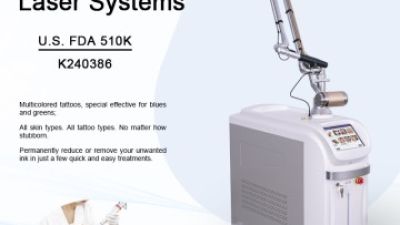
Picosecond Nd:Yag lasers offer a modern approach to tattoo removal by delivering extremely brief pulses of light that break ink into smaller particles. This photoacoustic effect helps the body’s immune system clear fragmented pigment, while limiting heat transfer to nearby skin. Depending on wavelength, treatment can target different ink colors and pigmentation. Results vary with ink color, tattoo depth, skin tone, and the patient’s response, so complete clearance cannot be guaranteed.
Treatment usually takes time: the American Academy of Dermatology notes that most tattoos require around 6–10 laser sessions, generally spaced 6–8 weeks apart. A picosecond device can support efficient treatment planning, but settings should be selected by a qualified practitioner after assessing the skin and tattoo. Temporary redness, swelling, or pigment changes may occur; careful aftercare and sun protection help support recovery. By breaking pigment into particles the body can gradually remove, this technology can help patients move toward clearer-looking skin with minimal downtime.
Conclusion
This article explores the principles behind the 10600nm CO2 Laser, including how its wavelength interacts with different materials and makes it useful across industrial processing and selected medical applications. It outlines common uses such as cutting, engraving, surface treatment, and precision procedures, while emphasizing that performance depends on the system design, application requirements, and appropriate operating practices.
The guide also presents key factors for assessing Chinese manufacturers, including product range, technical capabilities, quality control, customization, documentation, and after-sales support. A comparison of ten manufacturers in 2026 is framed around these practical considerations rather than brand promotion. Finally, the article reviews broader market trends, such as ongoing improvements in efficiency, automation, and application-specific solutions, to help readers evaluate suppliers and understand the changing CO2 laser industry.