Picking the right Ipl Shr Device supplier isn’t just about comparing prices, checking out the punchy product photos, or seeing how shiny a machine looks. There’s more to it—like really understanding their technical know-how, whether they have traceable manufacturing processes, and if they’re reliable when it comes to after-sales support. Trust me, these stuff really matter!
Industry insights back this up too. The International Society of Aesthetic Plastic Surgery (ISAPS) regularly ranks hair removal as one of the top non-surgical aesthetic treatments people get. Plus, reports from Grand View Research show the global market for hair removal devices is still booming – with clinics, salons, and even home-use gadgets all driving growth. But just because the market is expanding doesn’t automatically mean the devices are top quality. A lot of reports lump together IPL, lasers, and similar platforms, which can make apples-to-apples comparisons pretty tricky.
So, here’s the deal—look carefully. Don’t just take their word for it. Ask to see test records for photofacial treatments, lamp lifespan data, cooling system peRformance, and how fast they respond to service requests. And don’t hesitate to request important documents like ISO 13485 certification or IEC 60601 compliance info. A serious manufacturer should be upfront—explaining things like fluence, pulse duration, wavelength ranges, and skin type capabilities—without hiding behind fancy marketing talk. Small details matter here: Is the handpiece still comfortable to hold after a bunch of treatments? And if you need parts replaced, can they send them out in a few days, not weeks?
Dr. Michael H. Gold, a dermatologist and expert in aesthetic devices, always reminds us, “Patient safety has to be the top priority when choosing and using these devices.” That’s a principle that should guide every chat you have with a supplier. Whether it’s SHR, SHR IPL, or SHR hair removal, safety and transparency should be the main focus.
Now, no supplier is perfect—some test reports may be partial, or certifications might need a bit of independent checking. So, before you sign on the dotted line, compare their demos, ask for references from other clients, review warranty terms, and get a sense of their training and support. Because, honestly, the cheapest IPL SHR device might end up costing you more in the long run—think downtime, weak support, or inconsistent results. The key? Trustworthy suppliers back up their claims with evidence, not empty promises.
Before contacting a China IPL or SHR supplier, define the treatment you actually need. According to the ISAPS 2023 Global Survey, clinics performed over 19 million non-surgical aesthetic procedures worldwide. That scale increases the need for consistent specifications, not attractive product photos.
Write down your target areas, client skin tones, hair colors, treatment speed, and daily appointment volume. Specify wavelength ranges, spot size, fluence, pulse width, repetition rate, and cooling method. A Shr Hair Removal Machine Ipl Shr Laser may combine different terms. However, SHR usually describes repeated, lower-fluence pulses rather than a separate laser category. This distinction matters. Ask for measured output data, not only maximum settings. Include electrical standards, handpiece lifespan, water-cooling requirements, and software controls. Small details become expensive later.
Safety should shape the supplier shortlist. Request test reports aligned with IEC 60601-1 and documented quality procedures such as ISO 13485. Confirm calibration records, user training, maintenance intervals, warranty coverage, and spare-part availability. Ask how the supplier verifies energy stability after extended operation. A common mistake is choosing the strongest device. Stronger is not always better. Skin response varies, and inexperienced operators may need clearer presets and stronger safeguards. I would also test a demonstration unit under realistic clinic conditions. Check noise, screen usability, cooling recovery, and whether treatment records can be exported. ISAPS data shows strong procedural demand, but demand alone cannot prove device quality. Supplier transparency still needs independent verification.
When choosing a China IPL SHR device supplier, verify experience beyond a polished website. Ask for five-year production records, export destinations, complaint logs, and anonymized installation data. Real experience leaves paperwork. It also reveals weaknesses.
The ISO Survey 2023 reported more than 1.4 million ISO 9001 certificates worldwide. Certification matters, but its scope matters more. Confirm that it covers medical or aesthetic equipment manufacturing, not only office administration. Request ISO 13485 documentation, calibration records, incoming-part inspections, and batch traceability. A capable factory should show how each handpiece, lamp, filter, and power module is tested. Ask to observe burn-in testing, electrical safety checks, and final performance verification. Production capacity should include trained technicians, spare-part storage, and documented quality controls. A large building proves little.
Industry reports from Grand View Research identify expanding demand for energy-based aesthetic devices, increasing pressure on suppliers to deliver consistent quality. This makes factory depth more important than a low quotation. Check whether the supplier has engineers who understand optical output, cooling stability, pulse control, and user safety. Review independent test reports against applicable IEC standards, and verify their dates and model numbers. Do not rely on certificates sent as screenshots. That is an easy mistake.
A video tour can still mislead. Request a live audit or an independent inspection. Ask how failed units are isolated and corrected. If answers remain vague, capacity may exist only on paper. In my experience, honest suppliers discuss rejected components openly. Silence is not proof of quality.
Verify the supplier’s industry experience and manufacturing capacity through documented evidence rather than marketing claims. The chart presents an illustrative due-diligence weighting model for comparing suppliers.
Request business-registration records, production-site information, quality-management certificates, product test reports, regulatory documents, and after-sales service records. These categories should be verified independently before placing an order.
Choosing a top China IPL SHR device supplier requires more than comparing prices. Examine the light source, wavelength range, fluence stability, pulse width, spot size, and cooling system. For a Shr E Light/Shr Ipl Skin Rejuvenation Machine, ask for measured output data, not only screen settings. A stable sapphire contact surface should feel consistently cool during repeated pulses. Uneven cooling may cause discomfort and inconsistent treatment results.
Safety deserves equal attention. Request electrical safety testing aligned with IEC 60601-1 and documented risk management under ISO 14971. Check emergency-stop access, skin-contact sensors, over-temperature protection, and treatment logs. Grand View Research’s 2024 IPL market analysis projected strong market growth through 2030, but market expansion does not prove clinical quality. Reports also use different definitions. That limitation matters. Ask suppliers for recent test methods, sample sizes, and independent laboratory records.
Tips: Compare before-and-after photographs under identical lighting. Request a live demonstration after continuous operation, not a five-minute display. Review training materials and maintenance intervals. A practical evaluation should include darker and lighter skin simulations, because one preset rarely suits every client. Do not accept “painless” as a technical claim. Discuss fluence, cooling temperature, pulse delivery, and contraindication screening instead. Supplier responsiveness is another performance signal; slow answers before purchase may become slower support after installation.
Choosing a China IPL SHR device supplier requires more than reviewing product photos or attractive prices. Check the certificate number, issuing body, expiry date, and covered product model. The legal manufacturer should match the name on invoices, labels, and test reports. For the Ice Shr /Ssr +Ther Mage Ipl Shr Beauty Machine, request current documentation for electrical safety, electromagnetic compatibility, and optical safety. Requirements vary by destination market.
Quality control should be visible, not merely promised. Ask whether incoming parts are inspected and whether light intensity, cooling temperature, and handpiece output are recorded. A reliable factory should provide calibration records, batch numbers, and final inspection reports. Watch a demonstration of the cooling system. The handpiece should remain stable during repeated pulses, without unusual noise or heat. Small details matter.
Regulatory compliance also depends on the device’s intended claims and classification. Request the user manual, risk assessment, labeling samples, warranty terms, and technical file index. Verify that testing covers the exact model, not a similar-looking unit. A certificate copied from another product is a warning sign. Some suppliers may answer slowly or provide incomplete files; that does not always prove poor quality, but it deserves careful review. Do not accept vague promises. Ask precise questions, record every response, and use an independent inspection when possible.
How to Choose a Top China IPL SHR Device Supplier?
Price is important, but the lowest quotation rarely shows the full cost. Compare the device price, shipping, installation, consumables, and replacement parts. Request an itemized quotation with clear currency and payment terms. A practical test is useful. Ask for a live demonstration using the proposed model, not a similar machine. Check handpiece weight, cooling response, screen controls, and treatment-record functions. A common mistake is treating a low price as proof of value. It is not.
Warranty terms should be specific and written clearly. Confirm the coverage period for the power system, handpiece, cooling unit, and control board. Ask whether labor, remote diagnosis, spare parts, and shipping are included. Read every exclusion. Also check the supplier’s repair process and expected response time. A reliable supplier can provide serial-number records, inspection documents, and realistic delivery dates. Avoid promises that sound perfect.
Training affects safety and daily performance. Look for structured lessons covering operation, skin assessment, parameter selection, contraindications, cleaning, and fault handling. Live online training is helpful, but on-site instruction may suit busy clinics better. Ask whether trainees receive manuals, videos, and completion records. Technical support should cover your working hours, language needs, software updates, and spare-part availability. Keep questions in writing. It creates accountability. Still, support may be slower across time zones, so test the response before ordering.
| Supplier Category | Indicative Device Price (USD) | Warranty Benchmark | Training Included | Technical Support | Key Verification Documents | Best Use Case |
|---|---|---|---|---|---|---|
| Entry-Level OEM Supplier | US$1,500–3,500 Device only; shipping and tax excluded | Usually 12 months for the main unit; consumables and accidental damage are commonly excluded | Basic remote product introduction and operating manual | Email or messaging support during business hours; replacement parts may be charged separately | Written warranty scope, user manual, electrical safety documents, spare-parts list | Beauty salons with a limited budget and trained operators |
| Standard Professional Supplier | US$3,500–8,000 Configuration and handpiece count affect pricing | Commonly 12–24 months for the main system; handpieces may have separate limits | Live online training, treatment protocols, safety guidance, and operation assessment | Remote troubleshooting, video diagnosis, software guidance, and paid or included spare parts | Warranty certificate, serial-number record, training agenda, conformity documents, service process | Clinics and salons requiring regular treatments and predictable after-sales service |
| Advanced OEM Supplier | US$8,000–15,000 Higher-power systems and additional handpieces may increase cost | Often 24 months for the main unit; laser or IPL lamps, filters, and handpieces require detailed coverage terms | Structured online training, treatment parameter guidance, maintenance training, and certificates | Dedicated technical contact, remote diagnostics, troubleshooting videos, and defined response times | Electrical and EMC test reports, risk-management file summary, maintenance schedule, service-level terms | Medical-aesthetic practices and distributors needing stronger technical support |
| Turnkey Distributor-Ready Supplier | US$10,000–25,000+ May include branding, compliance assistance, training, and launch materials | 24 months or longer may be negotiated; exclusions, response time, and replacement policy must be contractual | Remote and on-site options, train-the-trainer programs, protocol development, and sales support | Ticket-based support, priority escalation, parts inventory planning, and possible local service coverage | Complete technical file, quality records, service-level agreement, distributor agreement, and parts plan | Regional distributors and organizations planning multiple-device deployment |
| Critical Comparison Checklist | ||||||
| Total Landed Cost | Compare device price plus handpieces, spare parts, packaging, freight, import duty, taxes, installation, training, and payment fees. | Request an itemized quotation with Incoterms, lead time, payment schedule, and validity period. | The lowest purchase price is not necessarily the lowest operating cost. | |||
| Warranty Scope | Confirm coverage for the power supply, cooling system, control board, handpiece, filters, lamp, and shipping-related failures. | Check whether labor, return freight, replacement parts, and remote diagnosis are included. | A verbal warranty promise should be treated as unconfirmed until it appears in the contract. | |||
| Training Quality | Training should cover contraindications, skin-type assessment, eye protection, test spots, cooling, parameter selection, and incident handling. | Ask for training duration, language, trainer qualifications, recording access, and certificate conditions. | A complete protocol and safety program is more valuable than a short product demonstration. | |||
| Technical Response | Prefer a written first-response target, such as one business day, and a clear escalation process for urgent faults. | Confirm communication channels, time-zone coverage, remote diagnostic capability, and availability of service manuals. | Ask how quickly commonly required parts can be identified, quoted, and shipped. | |||
| Compliance and Safety | Request documents relevant to the destination market, including electrical safety, electromagnetic compatibility, risk management, labeling, and user instructions. | Verify that the documents apply to the exact model, configuration, and manufacturer shown on the quotation. | Regulatory acceptance depends on the destination country and intended use; obtain local professional advice before purchase. | |||
Note: The price bands and service terms above are indicative B2B reference ranges for IPL/SHR equipment, not quotations from any specific company or brand. Final pricing and warranty conditions should be confirmed in a signed quotation and purchase contract.
Choosing a top China IPL SHR Device Supplier requires more than comparing prices. Assess how the supplier adapts an Ipl Shr Laser Hair Removal Device to your clinic’s needs. Ask about energy settings, handpiece options, cooling systems, user-interface languages, and private-label packaging. Request sample images, technical drawings, and a written customization schedule. Clear answers show practical manufacturing experience.
Delivery standards deserve equal attention. Confirm production lead times, inspection procedures, protective packaging, and shipping documents before placing an order. A reliable supplier should provide serial-number tracking, test records, spare-parts guidance, and responsive technical support. Check whether replacement components are available after delivery. A polished quotation can still hide weak after-sales service. No checklist catches everything, so verify each promise in writing.
Tips: Request a video factory audit. Compare one sample unit before bulk ordering. Ask for references from similar buyers, but verify them independently. Watch for vague answers about testing or delayed communication. Reliability is proven through consistent updates, accurate documents, and realistic delivery commitments—not attractive claims alone.
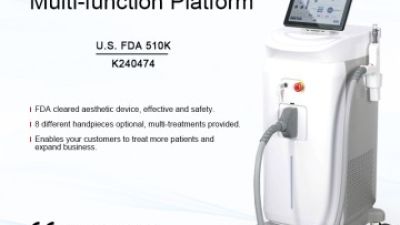
A multi-function aesthetic device with eight specialized handpieces can help clinics expand their treatment menu without purchasing multiple standalone systems. The platform is designed to support more than 80 aesthetic applications, allowing practitioners to select the most appropriate handpiece and parameters for each patient’s needs. Possible services may include skin rejuvenation, cleansing, infusion, firming, body contouring, and other non-invasive cosmetic treatments, depending on the configuration and approved operating protocols. This flexibility is increasingly relevant as demand grows: the ISAPS Global Survey 2023 reported approximately 19.1 million non-surgical aesthetic procedures performed worldwide by plastic surgeons.
Beyond treatment variety, a consolidated platform may improve room utilization, staff workflow, and patient convenience. However, providers should evaluate performance through practical criteria rather than the number of handpieces alone. Important considerations include energy consistency, ergonomic design, user-interface clarity, adjustable treatment settings, handpiece durability, and the availability of documented clinical protocols. Comprehensive training is particularly valuable for both new and experienced practitioners, helping teams select suitable applications and maintain consistent service quality.
Supplier selection is equally important. Clinics should review factory quality-control procedures, device traceability, warranty coverage, technical support, replacement-part availability, and training resources. Independent safety documentation and compliance with applicable local requirements should also be verified before purchase. A manufacturer with an established production facility and responsive after-sales service can provide greater reliability throughout the device’s working life, supporting sustainable growth in a competitive aesthetic market.
: Ask for five-year production records, export destinations, complaint logs, and anonymized installation data. Paperwork reveals experience. It also reveals weaknesses. A polished website proves very little.
Check certificate numbers, issuing bodies, expiry dates, covered models, and manufacturing scope. Request quality-system documents, calibration records, incoming-part inspections, and batch traceability. The legal manufacturer should match invoices, labels, and test reports.
Match every test report with the device model and current documentation. Review electrical, electromagnetic, optical, and safety testing where applicable. Do not accept screenshots alone. That is an easy mistake.
Watch incoming inspections, burn-in testing, electrical checks, and final performance verification. Ask how failed units are isolated, recorded, repaired, and retested. Check spare-part storage and technician training. A large building proves little.
Not completely. Request a live audit or independent inspection when practical. Inspect handpiece stability, cooling response, pulse control, and unusual heat or noise. A video can still mislead.
Request an itemized quotation covering the device, shipping, installation, consumables, and replacement parts. Clarify currency, payment terms, delivery dates, and included services. Test the proposed model directly. The lowest price is not always better value.
Confirm coverage for the power system, handpiece, cooling unit, and control board. Ask whether labor, remote diagnosis, spare parts, and shipping are included. Read all exclusions. Perfect promises deserve suspicion.
Training should cover operation, skin assessment, settings, contraindications, cleaning, and fault handling. Request manuals, videos, and completion records. Check support hours, language options, software updates, and spare-part availability. Test response times before ordering. Time zones can cause delays.
Choosing a top China IPL SHR Device supplier requires more than comparing product prices. Start by defining your application needs, including treatment types, target users, operating environment, and expected workload. Then evaluate each supplier’s industry experience, production capacity, and ability to maintain consistent manufacturing standards. Pay close attention to device technology, energy control, cooling systems, safety functions, treatment performance, and ease of operation. Reliable suppliers should also provide clear certification information, quality control procedures, testing records, and evidence of regulatory compliance for the intended market.
A complete evaluation should include pricing transparency, warranty coverage, operator training, maintenance guidance, and responsive technical support. It is also important to confirm customization capabilities, packaging quality, delivery schedules, spare-parts availability, and communication efficiency. By comparing these factors together rather than focusing only on the lowest quotation, buyers can identify a dependable supplier that offers safe, effective, and durable equipment while supporting long-term business operations.