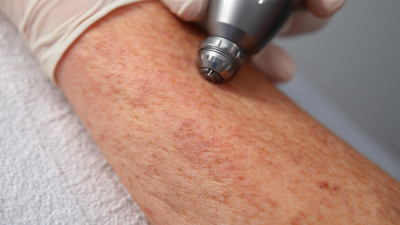
So, when you're looking at Picosecond skin rejuvenation equipment in 2026, you can't just get swayed by a fancy brand name or some impressive headline power. Honestly, you've got to dig into the nitty-gritty – like pulse duration, wavelength options, how much control you have over fluence, the variety of spot sizes, cooling systems, and – let's not forget – actual clinical outcomes that are documented. A glossy brochure might look pretty, but it can't replace solid evidence. Trust me on that.
You know, Dr. Tina Alster—she's like the go-to person when it comes to laser dermatology—always stresses that the trick to effective laser treatment is matching the wavelength to both the target and the patient. And honestly, that principle still holds up. Like, if you're dealing with pigmentation, the same device that works for that might not cut it for tattoo removal, Acne Scars, or uneven skin texture. There's a lot more to it, right? Things like your skin type, how deep the treatment needs to go, what you expect in terms of recovery, and honestly, who's behind the laser—their experience makes a huge difference. So it's not a one-size-fits-all kind of deal.
Take a good look around the treatment room, yeah? Can the clinician fine-tune the energy levels in small steps? And after using the handpiece for a few minutes, does it still feel balanced in the hand? Are all the safety protocols—like eye protection, emergency steps, servicing, and staff training—clearly written down? Honestly, these little things usually count for more than some flashy energy spec. Also, before you buy, make sure you double-check the regulatory approvals, how transparent the manufacturer is, what the warranty actually covers, and whether you can get local tech support when you need it.
You know, no platform wins every case. That's a pretty bold assumption to make, honestly. Some clinics are so focused on speed that they forget to check if the patients are even suitable. Others splurge on all these advanced tools that never get used. So a sensible evaluation? It's about getting hands-on with supervised demos, looking at peer-reviewed data, realistically estimating the upkeep costs, and talking to people who've actually worked with it. And when you look at before-and-after shots, make sure the lighting is consistent—otherwise you're comparing apples to oranges. Also, ask about the complications they ran into, not just the success stories.
Look, when we get to 2026, the really smart pick is going to be one that hits that sweet spot—clinical precision, patient safety, smooth workflow, and being upfront about what it can't do. Honestly, sometimes the less flashy option ends up being the smarter money, even if it doesn't impress anyone at a demo.
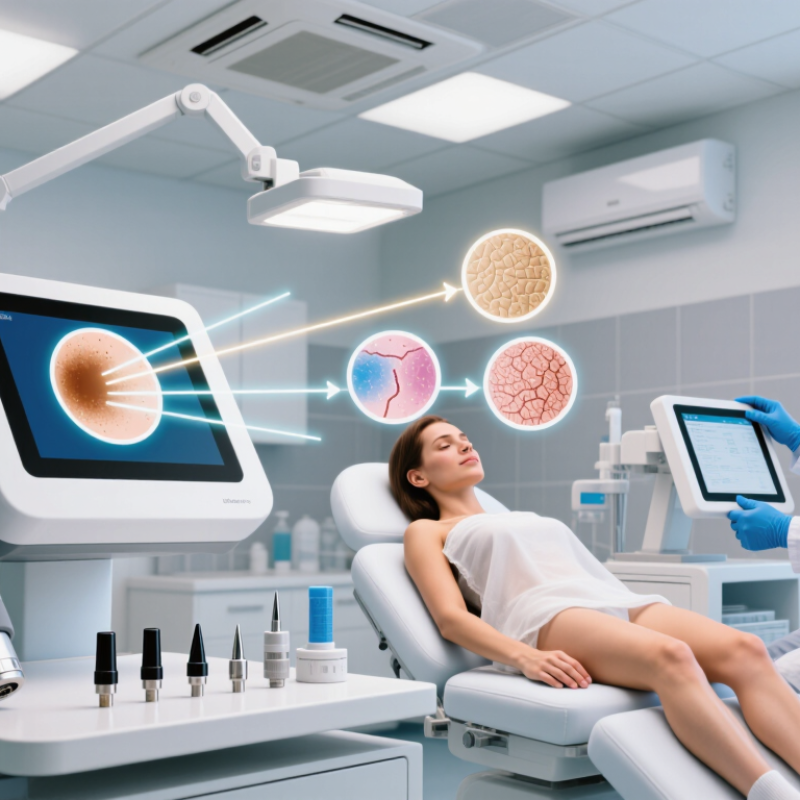
Define Picosecond Technology: Pulses Shorter Than 1 Nanosecond
When choosing picosecond skin rejuvenation equipment in 2026, begin with the pulse definition. A picosecond equals one trillionth of a second. A picosecond pulse lasts less than 1 nanosecond, or 1,000 picoseconds. This short delivery concentrates energy before substantial heat spreads through surrounding tissue. The result is mainly a rapid photomechanical effect, not a promise of instant renewal. That distinction matters.
In practical evaluation, ask for measured pulse duration at every available wavelength. Do not rely only on a brochure’s headline number. Compare fluence, spot sizes, repetition rates, beam profile, and pulse consistency. A Skin Rejuventation Picosecond Laser should allow controlled adjustments for different skin tones and treatment goals. Look for independent testing, maintenance records, safety interlocks, and clear operator training. These details show engineering maturity.
During a demonstration, inspect the handpiece balance and cooling response. A stable beam should produce predictable spots, not visibly uneven output. Request clinical evidence with follow-up photographs, consent procedures, and stated limitations. Ask how calibration is verified after transport or servicing. I would also question dramatic claims. Real clinics face pigment variation, missed appointments, and occasional treatment changes. No device removes clinical judgment. A cautious selection may feel slower, but it protects consistency, patient comfort, and long-term credibility.
Compare Fluence, Spot Size, Repetition Rate, and Pulse Profiles
How to Choose Picosecond Skin Rejuvenation Equipment in 2026?
Compare Fluence, Spot Size, Repetition Rate, and Pulse Profiles
Choosing picosecond equipment requires more than comparing maximum energy figures. Fluence, measured in joules per square centimetre, shows delivered energy density. Higher fluence is not automatically better. It must match the treatment goal, skin condition, and patient characteristics. A qualified practitioner should verify calibration records, cooling performance, and clinical guidance before treatment.
Spot size changes how energy behaves in tissue. Larger spots may cover the cheek efficiently and penetrate more consistently. Smaller spots can improve access around the nose or other tight areas. However, a small spot with excessive fluence may feel harsher and increase unwanted thermal stress. Repetition rate also matters. A fast rate can shorten sessions, but repeated passes may create heat accumulation. Watch the skin, not only the screen.
Pulse profiles deserve careful attention. Some systems offer different pulse durations or energy distributions, which can influence pigment fragmentation, acoustic effects, and patient comfort. Ask for measured output data, not only marketing language. In my experience, operators sometimes focus on impressive peak power and overlook beam uniformity. That is a mistake. I have also learned that real-world results vary with technique, skin response, and maintenance quality. A device may look excellent on paper, yet feel difficult to control in a busy clinic. Small test areas, consistent documentation, and conservative adjustments remain useful, even when the specification sheet seems convincing.
How to Choose Picosecond Skin Rejuvenation Equipment in 2026? - Compare Fluence, Spot Size, Repetition Rate, and Pulse Profiles
*The fluence values are representative operating ranges used for equipment comparison, not universal treatment prescriptions. Actual limits depend on wavelength, spot size, pulse duration, beam profile, cooling, skin type, treatment indication, and local regulatory requirements. Confirm the certified specification and perform a clinical test spot before treatment.
Evaluate Fitzpatrick I–VI Safety Data and Adverse-Event Rates
How to Choose Picosecond Skin Rejuvenation Equipment in 2026?
Safety claims require more than a “suitable for all skin types” label. For Picosecond Laser Skin Rejuvenation, request clinical data separated by Fitzpatrick I–VI. Darker skin can show delayed post-inflammatory hyperpigmentation, sometimes days after treatment. Ask for fluence, spot size, wavelength, pulse count, and follow-up duration. A 2022 systematic review of picosecond laser studies reported generally mild, temporary reactions, including erythema, swelling, and pigment changes. However, protocols varied widely, so pooled adverse-event rates remain difficult to compare. That limitation matters.
Check how events were defined. “Redness” lasting two hours is not equal to pigmentation lasting three months. FDA MAUDE surveillance reports can identify device-related complaints, but they cannot calculate true incidence because treatment numbers are unknown. Compare prospective studies with documented denominators. Look for separate outcomes in Fitzpatrick IV–VI, not only combined “skin of color” groups. My concern is simple: attractive percentages may hide missing follow-up. The evidence is not perfect.
Tips: Build a safety table for types I–VI. Record adverse events at 24 hours, seven days, and three months. Prefer studies reporting both event counts and treated-patient numbers. Test conservative settings on a small area first, especially for types V–VI. Review cooling, eye protection, and pigment-management protocols. Shorter pulses do not automatically mean lower risk.
Assess Cooling Systems, Eye Protection, and ANSI Z136.1 Compliance
How to Choose Picosecond Skin Rejuvenation Equipment in 2026?
Choosing picosecond equipment requires more than comparing pulse energy. Cooling performance deserves close attention. A reliable system should cool the treatment area evenly before and after each pulse. This can reduce discomfort and limit unnecessary heat exposure. Check the cooling method, response time, contact temperature, and maintenance requirements. During equipment evaluations, small delays can become obvious on larger treatment areas. Do not trust impressive specifications alone. Test the handpiece under realistic clinical conditions.
Eye protection is equally important. The device should include wavelength-specific protective eyewear for operators and patients. Eyewear must fit securely, remain comfortable, and allow clear communication. ANSI Z136.1 provides a recognized framework for laser safety controls, hazard evaluation, training, and protective procedures. Ask whether the supplier provides practical documentation, not just a compliance statement. Confirm warning signs, controlled-area procedures, emergency steps, and maintenance records. Compliance is an ongoing process.
Tips: Request a cooling demonstration. Inspect eyewear labels carefully. Review the user manual with trained staff. Ask who calculates protective eyewear requirements. Keep written safety checks for every treatment room. A checklist helps, but it can still miss poor staff habits. Reassess procedures after installation, especially when treatment settings change.
How to Choose Picosecond Skin Rejuvenation Equipment in 2026?
Assess Cooling Systems, Eye Protection, and ANSI Z136.1 Compliance
The chart shows established laser wavelengths commonly associated with picosecond applications in dermatology and skin rejuvenation. Wavelength alone is not a performance ranking and does not determine the required eyewear optical density.
When comparing equipment, verify that the cooling system provides controlled skin-temperature feedback, stable contact or airflow, and an emergency shutoff. Eye protection should be labeled for the exact operating wavelength and suitable optical density. ANSI Z136.1-based documentation should support hazard evaluation, engineering and administrative controls, operator training, protective eyewear selection, and service procedures.
Wavelength values are nominal emission wavelengths: 532 nm frequency-doubled Nd:YAG, 694 nm ruby, 755 nm alexandrite, and 1064 nm Nd:YAG. Final protective-eyewear requirements must be determined from the device output, pulse characteristics, exposure limits, and a qualified laser-safety assessment.
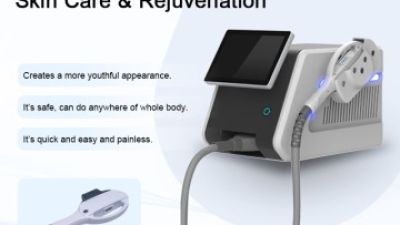
IPL, SHR, and SSR Technology: A Guide to Skin Care and Rejuvenation Devices
IPL, SHR, and SSR are light-based technologies used in modern skin care and rejuvenation treatments. IPL photofacial therapy delivers controlled broad-spectrum light to target the visible effects of sun exposure, age spots, redness, and uneven skin tone. Unlike extensive cosmetic surgery, IPL treatments are minimally invasive and generally involve little downtime, allowing many clients to return to normal activities quickly. Makeup may often be applied the following day, while visible improvements can develop gradually over the next few weeks.
SHR, or Super Hair Removal, uses repeated low-energy pulses with gradual heating to improve treatment comfort and support hair-reduction procedures. SSR, commonly known as Super Skin Rejuvenation, focuses on refreshing the appearance of the skin by delivering light energy across selected treatment areas. The BL-D30 combines practical IPL-based functions in a professional device design, making it suitable for customized facial care and rejuvenation programs. Treatment parameters should be selected according to skin type, treatment goals, and the condition of the target area, with appropriate eye protection and qualified operation used throughout each session.
Conclusion
Choosing Picosecond Skin Rejuventation equipment in 2026 requires more than comparing advertised power. Start by confirming that the system delivers pulses shorter than one nanosecond, then match its wavelengths to treatment goals: 532 nm for selected superficial pigmentation, 755 nm for specific pigment and tattoo-related concerns, and 1064 nm for deeper targets and a broader range of skin types. Compare fluence, spot size, repetition rate, and pulse profiles to determine treatment flexibility, comfort, and efficiency.
Safety and long-term value are equally important. Review clinical data covering Fitzpatrick skin types I–VI, including adverse-event rates and recovery expectations. Verify relevant FDA clearance, CE marking, IEC 60601 compliance, and ISO 13485 certification. Assess integrated cooling, appropriate eye protection, and alignment with ANSI Z136.1 laser-safety practices. Finally, calculate five-year ownership costs, including servicing, replacement handpieces, staff training, consumables, downtime, and realistic return on investment. A well-supported, safety-focused platform is generally a better choice than one selected solely for its peak specifications.