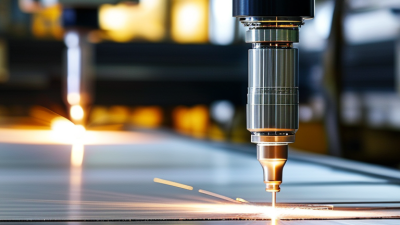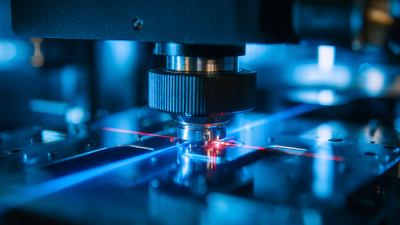
Picking the best 1550nm Fiber Laser in 2026 is about more than just looking at the advertised output power. You really need to consider how well the system fits your specific needs—like the material you're working with, the distance, pulse type, and your production schedule. For example, a lab might care more about having a narrow linewidth and low relative intensity noise, while a factory might prioritize stable power, sealed cooling systems, and easy maintenance. Honestly, both can be the right choice depending on what you're doing.
Professor David J. Richardson, a well-known researcher in fiber lasers, once said, ‘The real challenge isn’t just generating power, but managing it reliably.’ That advice still holds true today. When shopping around, make sure to check the beam quality, spectral width, how stable the pulses are, the connector design, and how it handles heat. It’s also smart to ask for test data at the actual operating temperature—don’t just accept what you see at the showroom. Look for suppliers who provide traceable measurements, good application support, and a fair warranty. Companies like Coherent, IPG Photonics, and nLight can give you good benchmarks, but at the end of the day, you really need to test the product yourself to be sure it’s the right fit.
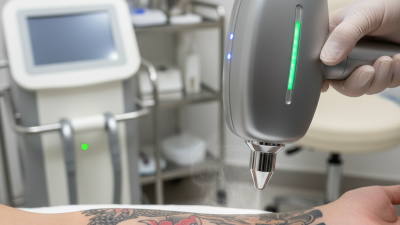
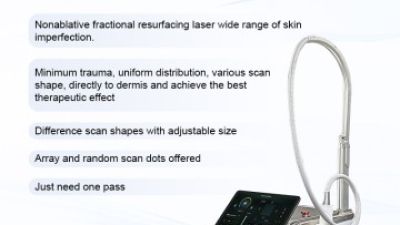
If you’re working on medical or cosmetic equipment, like an Erbium Glass Fractional Fiber Laser 1550nm Machine, then there’s a bit more to consider. Things like controlled energy delivery, precision in handpiece design, cooling peRformance, and clearly documented safety procedures are crucial. Wavelength alone isn’t enough—those other factors really matter.
One quick heads-up: product specs aren’t always measured under identical conditions, and brochure details can sometimes gloss over tricky engineering parts. So, don’t rely solely on specs; ask for sample data, test the equipment with a typical workpiece, and keep track of how it performs over a longer period. Usually, the most powerful model isn’t the best choice. The real winner is the one that stays predictable when things get warm, when shifts are long, and the application gets a little less forgiving. It’s all about reliability in real-world conditions.
How to Choose the Best 1550nm Fiber Laser in 2026?
A 1550nm fiber laser produces light near 1,550 nanometers through an erbium-doped optical fiber. Pump diodes add energy to the erbium ions. The excited ions then release matching photons. This creates stimulated emission and amplifies thE Light inside the fiber. Mirrors or fiber gratings help form the laser cavity. A coupler finally delivers the output beam.
The laser may operate continuously or produce controlled pulses. Its wavelength suits fiber communications, sensing, inspection, and selected medical applications. It often travels efficiently through optical components and can support precise energy delivery. However, performance depends on pulse width, average power, beam quality, cooling, and control electronics. A high power rating alone does not guarantee better results. Real testing matters. Safety eyewear and suitable enclosures remain essential, even when the beam appears invisible.
Tips: Check the required output mode before comparing models. Ask for measured stability data, not only catalogue values. Confirm connector type, cooling capacity, and service support. Also separate related terms carefully. “Fractional Fiber Erbium Yag Laser 2940nm 1550nm” combines technologies with different operating principles. A 2940nm Er:YAG laser is not the same as a 1550nm fiber laser. That distinction can prevent an expensive mistake.
Selecting a 1550nm Fractional Er Fiber Laser requires more than checking output power. Power alone misleads. Optech Consulting’s 2024 industrial laser review reports that fiber lasers now represent over half of industrial laser revenues, increasing specification pressure. For real applications, verify wavelength accuracy, linewidth, power stability, beam quality, and thermal drift. A stable 1550nm center wavelength matters when filters, sensors, or interferometers have narrow operating windows.
Linewidth should match the application. Coherent sensing may require kilohertz-level linewidth, while material processing often prioritizes pulse energy and repetition-rate control. The European Telecommunications Standards Institute identifies tight frequency stability as essential in precision optical systems. That principle also applies here. Ask for measured data, not marketing language. Look for power stability below 1% over eight hours, when the application demands consistent exposure. M² near 1.2 indicates a cleaner beam, but measurement conditions must be disclosed.
Pulse width, timing jitter, relative intensity noise, and cooling performance deserve equal attention. A 2024 report from MarketsandMarkets forecasts continued growth in fiber laser demand through 2029, driven partly by automation and precision manufacturing. That growth may tempt buyers to over-specify every parameter. I have seen this mistake. Extra power cannot repair poor beam quality. IEC 60825-1 also requires documented safety evaluation, even around the comparatively eye-safer 1550nm range. Request test conditions, calibration dates, and long-duration logs before comparing quotations. Tacit assumptions create expensive surprises.
How to Choose the Best 1550nm Fiber Laser in 2026?
How to Match Laser Types to Your Application
When selecting a 1550nm Fiber Laser Device, start with the task, not the catalog. Continuous-wave lasers suit stable sensing, communications testing, and controlled heating. Pulsed lasers work better for ranging, marking, and short-duration measurements. Pulse width matters. Nanosecond pulses can produce stronger surface effects, while longer pulses may reduce thermal stress.
For fiber sensing, prioritize narrow linewidth, low noise, and stable wavelength control. A wider tuning range helps when testing several fiber types or environmental conditions. For lidar and distance measurement, examine pulse energy, repetition rate, and timing accuracy. High peak power is useful, but excessive energy can create unwanted reflections or detector saturation. In real installations, connector loss and bend sensitivity can matter more than headline output power.
I would test the laser with the actual cable length and receiver before purchasing. Laboratory results can look impressive. Field performance may differ. Ask for measured stability data, not only nominal specifications. Cooling, modulation speed, and service access also deserve attention. A compact unit may fit a crowded rack, yet become difficult to maintain. I have seen teams choose maximum power and later reduce it because their sensor needed cleaner signals, not stronger ones. That mistake is easy to repeat.
| Laser type | Typical operating characteristics | Typical output range | Best-fit applications | Key selection criteria | Main limitations |
|---|---|---|---|---|---|
| Continuous-wave (CW) fiber laser | Steady optical output with low intensity variation; commonly selected when average power and stable illumination are more important than peak power. | From milliwatt-level sources to tens of watts, depending on architecture and cooling. | Fiber-optic communications testing, photonic sensing, interferometry, illumination, calibration, and low-to-moderate-power materials processing. | Output power stability, relative intensity noise, polarization stability, linewidth, connector type, and thermal management. | Lower peak power than pulsed systems; continuous exposure can increase heat accumulation in sensitive materials. |
| Nanosecond pulsed fiber laser | Generates pulses typically lasting several nanoseconds to hundreds of nanoseconds, providing higher peak power than CW operation. | Average power commonly ranges from a few watts to tens of watts; pulse energy and peak power depend strongly on repetition rate and pulse width. | LiDAR, time-of-flight measurement, range finding, remote sensing, marking, micromachining, and nonlinear optical experiments. | Pulse width, repetition rate, pulse energy, timing jitter, peak power, beam quality, and synchronization interface. | Can produce stronger thermal or nonlinear effects; pulse parameters must be matched carefully to detectors and materials. |
| Gain-switched or directly modulated pulsed laser | Uses rapid electrical modulation to produce short optical pulses, often with compact electronics and high repetition rates. | Usually milliwatt-level to low-watt-level average power, depending on pulse format and amplifier stages. | Optical communications, reflectometry, compact ranging systems, test instruments, and seed sources for fiber amplifiers. | Modulation bandwidth, pulse extinction ratio, timing control, chirp, spectral width, and electrical drive requirements. | The optical spectrum may broaden or chirp during modulation; it is not the first choice where very narrow linewidth is required. |
| Mode-locked ultrafast fiber laser | Produces picosecond or femtosecond pulses with very high peak power and a pulse train determined by the cavity repetition rate. | Average power is commonly from milliwatts to several watts; peak power can be high even when average power is modest. | Two-photon microscopy, nonlinear frequency conversion, ultrafast spectroscopy, precision micromachining, and optical frequency-comb work. | Pulse duration, repetition rate, timing jitter, carrier-envelope stability, spectral bandwidth, and compressor requirements. | More sensitive to dispersion, nonlinear propagation, alignment, and damage thresholds; generally more complex and costly to integrate. |
| Narrow-linewidth fiber laser | Designed for high spectral purity, typically using a stabilized seed source and fiber amplification; linewidth may range from kilohertz to megahertz scales. | From milliwatt-level seed output to watt-level amplified output; higher power is possible with suitable system design. | Coherent LiDAR, distributed acoustic sensing, fiber Bragg grating interrogation, interferometry, metrology, and coherent communications. | Linewidth, frequency drift, phase noise, wavelength accuracy, coherence length, polarization extinction ratio, and environmental stability. | Narrow linewidth alone does not guarantee low noise; vibration, temperature, stimulated Brillouin scattering, and amplifier noise may limit performance. |
| Tunable 1550nm fiber laser | Allows controlled wavelength adjustment around the 1550nm region; tuning range depends on the gain medium, filter, and cavity design. | Typically milliwatt-level to low-watt-level output, with power often varying across the tuning range. | Wavelength-swept sensing, spectroscopy, optical component testing, gas detection, telecommunications, and fiber sensor interrogation. | Tuning range, wavelength accuracy, tuning speed, mode-hop-free range, output power flatness, and repeatability. | Broad tuning may reduce power uniformity or linewidth; fast tuning can introduce chirp and transient wavelength errors. |
| Single-frequency fiber laser | Operates on one longitudinal mode or a highly controlled narrow spectral component, offering long coherence and low spectral ambiguity. | Commonly milliwatt-level to several watts, depending on cavity design and power-scaling method. | Precision interferometry, coherent detection, high-resolution sensing, metrology, and frequency references. | Side-mode suppression ratio, linewidth, frequency stability, relative intensity noise, polarization, and environmental packaging. | Power scaling is more challenging because nonlinear effects and parasitic lasing can degrade single-frequency operation. |
| 1550nm fiber amplifier / MOPA system | Uses a master oscillator as a seed and one or more amplifier stages to increase output power while preserving the seed's wavelength or pulse format. | Can scale from milliwatts to tens or hundreds of watts, subject to pulse format, fiber design, and nonlinear-effect limits. | Long-range LiDAR, free-space optical links, remote sensing, nonlinear optics, test systems, and higher-power instrumentation. | Seed compatibility, gain, amplified spontaneous emission, nonlinear phase accumulation, SBS threshold, beam quality, and cooling. | More components and control requirements; excessive gain or peak power can cause nonlinear distortion and fiber damage. |
| Eye-safer 1550nm source for sensing or ranging | Operates in a wavelength region with substantially higher permissible exposure limits than many visible and near-infrared wavelengths, but it remains optically hazardous. | Application-dependent; low-power systems may use milliwatts, while long-range pulsed systems can require much higher peak power. | Automotive and industrial LiDAR, range measurement, atmospheric sensing, and free-space optical systems. | Laser safety classification, pulse energy, repetition rate, beam divergence, receiver sensitivity, atmospheric loss, and compliance testing. | “Eye-safer” does not mean eye-safe under all conditions. Direct or magnified exposure can still cause injury, and applicable laser-safety standards must be followed. |
Choosing a 1550nm Fiber Laser Machine requires more than checking its advertised wattage. Beam quality determines spot size, focus tolerance, and edge consistency. ISO 11146 recommends measuring beam propagation with M², not relying on a marketing photograph. For precision work, an M² value near 1 indicates stronger focusability. Ask for the test method, lens, and measurement distance. Small details matter.
Power should match the material and duty cycle. A 2024 MarketsandMarkets report estimated the industrial laser market at approximately USD 7.4 billion, reflecting wider adoption across manufacturing. That growth does not make every high-power source suitable. Confirm continuous-wave or pulsed output, short-term peak power, and thermal drift. A 300 W source may perform poorly if its output falls during a six-hour shift. Test it warm.
Wavelength stability is equally important, especially near 1550 nm. Review the stated center wavelength, spectral width, and drift over temperature. Telecommunications measurement practice commonly uses picometer-level wavelength control, but industrial systems may specify broader tolerances. Compare like with like. Request an independent power meter record and a time-based spectrum trace. I would also repeat the test after transport; factory data can look excellent before vibration and dust intervene. Specifications are useful, but evidence is better.
Beam Quality, Output Power, and Wavelength Stability Reference
The chart shows representative engineering reference points for 1550nm fiber lasers. Higher output power supports demanding applications, while a lower M² value indicates better beam quality and lower wavelength drift indicates stronger spectral stability. M² = 1.00 represents the diffraction-limited beam quality.
Safety should be checked before output power or purchase price. At 1550nm, corneal absorption can reduce retinal exposure, but invisible radiation remains dangerous. IEC 60825-1:2014 requires risk classification, protective housing, interlocks, and suitable labeling. Ask for the laser class, not vague “eye-safe” claims. ANSI Z136.1 also recommends controlled access, beam enclosures, and trained operators. A safety assessment should include reflected beams from metal surfaces. Small workshops often overlook this point.
Reliability depends on more than rated lifetime. Request accelerated aging results, thermal-cycle data, output-power drift, and failure-rate records. ISO 13309 and ISO 11146 provide useful guidance for beam measurement and power stability checks. A 2023 U.S. Department of Energy solid-state lighting report identifies thermal management as a major driver of component reliability; the same lesson applies to fiber lasers. Keep the cooling path clean. Dust on a heat exchanger can quietly increase operating temperature and shorten diode life. Water quality matters too, especially in closed-loop systems.
Maintenance requirements should be visible before installation. Check filter replacement intervals, coolant inspection procedures, calibration access, and spare-part availability. A practical acceptance test can record power, spectrum, and beam quality at startup, after eight hours, and after thermal cycling. I would not trust a perfect laboratory chart alone. Field conditions are messier. The best choice may be the unit with simpler diagnostics, even when its headline efficiency is slightly lower.
How to Choose the Best 1550nm Fiber Laser in 2026?
Supplier selection should start with verified operating data, not impressive brochures. Ask for measured output power, wavelength stability, beam quality, cooling requirements, and service records. ITU-T G.652.D provides a recognized reference for fiber performance around the 1550nm window. IEC 60825-1:2014 also defines laser safety classifications. A reliable supplier should explain compliance clearly and provide traceable test reports.
Calculate total cost over the expected service period. Include purchase price, electricity, cooling, consumables, downtime, calibration, and replacement parts. For example, a 300W system running 4,000 hours yearly uses about 1,200kWh. At $0.12 per kWh, direct electricity costs $144 annually. Cooling may raise that figure significantly. Yole Group’s 2024 photonics market analysis highlights efficiency and reliability as major purchasing factors. Cheap hardware can become expensive after repeated service delays.
Request a realistic warranty, repair timetable, spare-parts policy, and failure-rate data. Laser Focus World’s 2024 industry coverage also emphasizes supply-chain resilience in photonics manufacturing. I would score each supplier with the same spreadsheet. My first calculation usually misses operator training and shipping insurance. That mistake matters. Compare five-year cost per operating hour, not only the invoice. A supplier offering local technical support may deliver better value, even with a higher initial price. Reliability has a price.
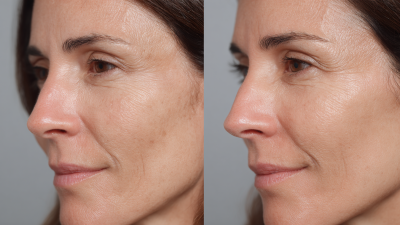
1550nm and 1927nm fiber laser nonablative fractional resurfacing offers a versatile approach to skin renewal with limited downtime. The 1550nm wavelength penetrates deeper into the dermis to stimulate collagen remodeling, making it suitable for mild to moderate laxity, acne scars, and age-related texture changes. The 1927nm wavelength is absorbed more strongly by water and works closer to the skin surface, helping improve pigmentation, uneven tone, and photoaged skin. Used independently or in combination, these wavelengths can be tailored to different skin concerns and treatment depths.
The BL-K20 platform is designed for controlled fractional delivery, creating microscopic treatment zones while preserving surrounding tissue. This approach may support faster recovery than fully ablative resurfacing and can be considered for facial rejuvenation, acne vulgaris, superficial scars, and overall skin refinement. Clinical reviews of fractional nonablative laser therapy have reported measurable improvements in wrinkles, dyschromia, and scar appearance after a series of treatments, while the 2023 American Society of Plastic Surgeons statistics continued to list laser skin resurfacing among established aesthetic procedures. Treatment parameters should be selected according to skin type, indication, seasonal sun exposure, and recovery expectations, with appropriate eye protection and professional assessment.
Choose continuous-wave output for stable sensing, communications testing, or controlled heating. Pulsed output suits ranging, marking, and short measurements. The task decides.
Nanosecond pulses can create stronger surface effects. Longer pulses may reduce thermal stress on sensitive materials. Test the actual target before deciding.
Prioritize narrow linewidth, low noise, and stable wavelength control. A wider tuning range helps with different fiber types and temperatures. High power is not always better.
Review pulse energy, repetition rate, and timing accuracy. Excessive energy may cause reflections or detector saturation. Clean timing matters more than impressive peak power.
Yes, test the real cable length and receiver before purchase. Connector loss and bend sensitivity can change field performance. Laboratory results may look better.
Check cooling, modulation speed, service access, and rack space. A compact unit may fit tightly but become difficult to repair. Leave maintenance room.
Request measured output power, wavelength stability, beam quality, and cooling data. Ask for traceable test reports and clear safety compliance information. Brochures are not enough.
Include electricity, cooling, calibration, downtime, consumables, and replacement parts. For example, 300 watts running 4,000 hours uses about 1,200 kilowatt-hours yearly. At $0.12 per kilowatt-hour, electricity costs about $144. Cooling adds more.
Ask about repair times, spare parts, failure rates, and technical support. Local assistance may provide better value despite a higher purchase price. My first estimate often misses training and shipping insurance. That matters.
Choosing maximum power without checking signal quality or detector limits. Some teams later reduce the output because their sensors need cleaner signals. More power can create problems.
Choosing the best 1550nm Fiber Laser in 2026 requires more than comparing output power. These lasers operate at a wavelength valued for strong transmission through optical fiber, eye-safer system design, and suitability for communications, sensing, ranging, medical equipment, and precision processing. Start by understanding how the laser generates and amplifies light, then evaluate specifications such as continuous or pulsed operation, output power, pulse duration, repetition rate, electrical efficiency, and modulation capability. The ideal laser should match the application’s material, distance, resolution, speed, and integration requirements.
Beam quality, wavelength stability, thermal control, and power consistency are essential for predictable results. Buyers should also examine protective features, cooling design, serviceability, expected operating life, and maintenance needs. A reliable supplier should provide clear technical documentation, testing data, warranty coverage, responsive support, and customization options when necessary. Finally, calculate long-term value by considering purchase price, energy use, installation, downtime, maintenance, replacement parts, and productivity. A balanced evaluation helps ensure the selected 1550nm Fiber Laser delivers safe, stable, and cost-effective performance.