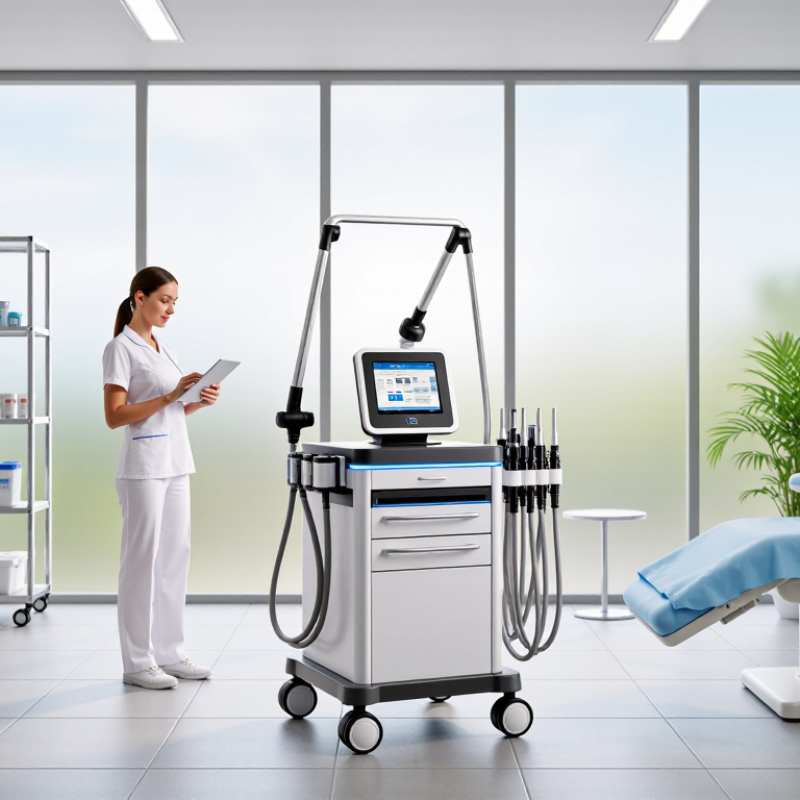
Honestly, picking a Slimming Device manufacturer isn't just a purchasing decision. It can affect how safe the product is, how consistent treatments turn out, how good the training is, and whether customers trust you over the long run. Manufacturers with real experience know how devices actually behave outside a showroom demo. They pay attention to things like energy output, patient comfort, maintenance needs, and how different bodies respond.
So what should you look for? Documented testing, clear operating instructions, and technical support that actually gets back to you. A reliable Diode Laser Hair Removal Device Manufacturer should be able to explain specs without making big, exaggerated promises. They should give you traceable quality procedures, user training, and practical guidance for routine servicing. Those details really matter when a device is running every day in a busy clinic. Even small design choices can affect appointment times, how confident your operators feel, and what clients experience.
The best partnerships come down to honest communication. Ask how the manufacturer verifies peRformance and handles product updates. Ask for evidence, not just polished marketing talk. Results vary in real life—and that deserves attention. Even well-designed equipment can't replace professional assessment, appropriate treatment settings, or responsible aftercare. Some manufacturers might have impressive tech but pretty limited support after delivery. That gap can get expensive later on. A thoughtful evaluation should compare engineering expertise, quality control, communication, and service reliability. Choosing carefully might take more time up front, but it can lead to safer workflows and more consistent outcomes. Mistakes still happen. The real question is whether the manufacturer owns them, digs into the cause, and improves the process.
A slimming device manufacturer is a company that designs, develops, tests, and produces equipment intended to support body-contouring or weight-management services. It is more than a factory. Its work may include engineering, material selection, software development, safety checks, and production control. A reliable manufacturer explains how each device works, rather than promising dramatic results.
In practice, engineers may test temperature stability, energy output, electrical insulation, and emergency shutdown functions. Quality teams should record component batches and inspect finished units before shipment. Clear user instructions matter too. They help professionals understand treatment limits, maintenance needs, and possible discomfort. Evidence should support the device’s intended use. Marketing language should not replace technical data.
Experience often appears in small details. A well-designed handpiece feels balanced, cables resist repeated bending, and control screens remain readable during busy appointments. Still, no device is perfect. Results can vary with skin condition, treatment settings, operator training, and individual habits. Manufacturers should acknowledge these limits. They should also investigate complaints, update instructions, and provide responsive technical support. That level of accountability helps clinics choose equipment based on safety, performance, and documented reliability instead of attractive claims alone.
| Evaluation Dimension | What a Slimming Device Manufacturer Does | Typical Technical Data | Why It Matters to Buyers | Recommended Verification |
|---|---|---|---|---|
| Definition and Scope | Designs, develops, tests, produces, and supports non-invasive body-contouring or aesthetic devices used to improve the appearance of localized fat, skin laxity, or body shape. | Common technologies include radiofrequency, cryolipolysis, focused Ultrasound, electrical muscle stimulation, vacuum massage, and light-based systems. | A direct manufacturer can provide technical documentation, product training, spare parts, and after-sales support from one source. | Review the manufacturer’s product scope, engineering capability, quality procedures, and service structure. |
| Radiofrequency Technology | Develops applicators and control systems that deliver radiofrequency energy to heat targeted tissue layers in a controlled manner. | Aesthetic RF systems commonly operate in the approximate range of 0.5–2.45 MHz, although frequency and output vary by design. | Consistent energy delivery and temperature monitoring help improve treatment repeatability and user safety. | Ask for output specifications, temperature-control methods, contact detection, treatment protocols, and electrical safety test records. |
| Cryolipolysis Systems | Manufactures controlled-cooling systems designed to expose selected tissue to regulated low temperatures through an applicator. | Applicator temperatures and treatment duration vary by model, body area, applicator geometry, and control algorithm; many systems use monitored cooling below normal skin temperature. | Precise cooling control, skin-temperature monitoring, and applicator fit are important for consistent treatment delivery. | Check cooling curves, sensor calibration, automatic shut-off functions, skin-protection measures, and clinical documentation. |
| Ultrasound and HIFU | Develops transducers that convert electrical energy into acoustic energy for controlled, localized applications. | Ultrasonic aesthetic systems may use frequencies from the kilohertz range for cavitation-style applications or the megahertz range for focused ultrasound; exact values are model-specific. | Transducer calibration, acoustic output control, and treatment-depth management influence performance and safety. | Request acoustic-output data, transducer-life information, treatment-depth specifications, and maintenance procedures. |
| Electrical Muscle Stimulation | Designs electrode systems and pulse-control software that deliver electrical impulses to stimulate selected muscles. | EMS parameters commonly include adjustable pulse frequency, pulse width, intensity, duty cycle, and treatment time; many systems operate across approximately 1–100 Hz. | Accurate current control, electrode contact monitoring, and adjustable programs support user comfort and repeatable operation. | Verify waveform specifications, maximum output, contraindications, electrode materials, and emergency-stop functions. |
| Light-Based Systems | Produces LED or other light-based devices with controlled wavelength, irradiance, treatment time, and exposure area. | Common aesthetic LED ranges include approximately red light at 630–660 nm and near-infrared light at 810–850 nm, depending on the intended application. | Stable optical output and uniform coverage help maintain consistent treatment conditions. | Check wavelength tolerance, irradiance measurement, eye-protection requirements, timer accuracy, and thermal management. |
| Quality Management | Controls design changes, supplier qualification, production inspection, device traceability, complaints, and corrective actions. | ISO 13485 is a widely used quality-management standard for medical devices; applicability depends on the product and target market. | A documented quality system reduces production variation and supports regulatory submissions and audits. | Request the quality certificate, scope of certification, audit status, batch records, and complaint-handling process. |
| Safety and Risk Management | Identifies hazards, evaluates foreseeable misuse, implements protective controls, and validates safety-related functions. | Commonly relevant frameworks include IEC 60601-1 for basic safety and essential performance of medical electrical equipment and ISO 14971 for medical-device risk management. | Risk-based engineering helps address overheating, electrical hazards, excessive energy delivery, skin injury, and user error. | Review risk-management files, electrical safety reports, biocompatibility information for skin-contact parts, and usability testing. |
| Clinical and Performance Evidence | Generates or supports laboratory testing, usability studies, clinical evaluations, and post-market performance monitoring. | Evidence quality depends on study design, sample size, treatment protocol, follow-up period, objective measurements, and reporting transparency. | Independent and well-documented evidence is more useful than unsupported claims about weight loss or permanent results. | Examine study methods, inclusion criteria, measured endpoints, adverse events, follow-up duration, and whether results match the specific device. |
| Customization and OEM/ODM Support | May adapt enclosure design, software interface, applicators, language settings, packaging, documentation, and treatment programs. | Customization can involve user-interface languages, operating voltage, accessories, parameter limits, labeling, and regional documentation. | A flexible manufacturer can align the device with a distributor’s market, training model, and service capabilities. | Confirm minimum order quantity, design-change controls, ownership of technical files, sample approval, and change-notification procedures. |
| After-Sales Service | Provides installation, operator training, troubleshooting, preventive maintenance, calibration, spare parts, and software support. | Service requirements vary by technology; temperature, pressure, electrical output, optical intensity, and applicator condition may require periodic checks. | Reliable service reduces downtime and helps operators maintain approved operating conditions. | Ask for warranty terms, response times, spare-part availability, calibration intervals, service manuals, and technician training. |

Note: Technical ranges are typical industry examples rather than universal specifications. Actual performance, intended use, regulatory classification, and permitted claims depend on the specific device and target market.
Designing a slimming device begins with understanding real user needs, not chasing impressive specifications. Development teams study skin contact, treatment duration, body positioning, and daily cleaning habits. A device may look elegant on a screen, yet feel heavy after ten minutes. That detail matters.
Engineers then select energy sources, materials, sensors, and control systems based on measurable performance. Temperature, pressure, electrical output, and contact quality require repeated testing.
Protective limits are built into the software and hardware. Testing should include normal use, misuse scenarios, and long operating cycles. Small parts need secure construction. Clear instructions matter too.
Clinical or laboratory evidence should support any performance statement. Independent testing can reveal weaknesses that internal reviews miss. A reliable manufacturer documents design changes, component checks, and quality inspections. It also considers applicable safety and consumer product requirements before production.
No prototype is perfect. A polished casing cannot fix poor heat control. Even experienced teams can overlook user comfort or maintenance. That is why feedback must continue after early testing, rather than ending when the device looks finished. Choosing a capable manufacturer means choosing disciplined development, transparent evidence, and a willingness to improve imperfect designs.
Choosing a slimming device manufacturer starts with understanding available technologies and product types. A reliable 1060nm Diode Laser Body Sculpture Device Manufacturer may offer non-invasive systems for selected body contouring applications. These devices use controlled light energy and require accurate temperature monitoring, clear operating limits, and trained users.
Radiofrequency systems deliver controlled heat to targeted tissue, while EMS devices create muscle contractions through electrical stimulation. Ultrasound platforms use acoustic energy for specific aesthetic procedures. Cryolipolysis systems rely on controlled cooling and need careful applicator placement. Each technology feels different during treatment. Results can also vary.
Product formats include portable units, tabletop machines, and larger multi-function platforms. Portable devices suit smaller clinics with limited treatment rooms. Multi-function systems may save space, but complicated interfaces can increase training needs. Ask manufacturers for testing records, maintenance guidance, user manuals, and realistic treatment parameters. Independent safety verification matters.
Practical experience reveals small details. A heavy handpiece can tire operators during a busy afternoon. A noisy cooling system may disturb clients. Software is not always intuitive. Manufacturers should explain cleaning routines, calibration schedules, warranty coverage, and technical support. No device fits every body or expectation. Reliable suppliers acknowledge these limits instead of promising instant transformation.
A reliable slimming device manufacturer treats safety as a daily process, not a printed claim. Engineers inspect circuit boards, cooling systems, handpieces, and protective housings before equipment leaves the factory. Small details matter. A loose connector can interrupt treatment. Uneven energy delivery may create discomfort or poor results.
An experienced Fractional Co2 Laser Device Manufacturer should maintain traceable production records and clear testing procedures. These records can show who inspected each unit, which materials were used, and when calibration occurred. Quality teams should test temperature control, power stability, emergency shutdowns, and user protection features. Training also matters. Sales information cannot replace practical guidance for operators.
Manufacturing standards should reflect applicable safety requirements and local regulations. Independent testing can provide useful evidence, although certificates alone do not guarantee careful production. Buyers should ask how defects are handled, how technical support works, and whether replacement parts remain available. Honest answers build more trust than polished promises.
No factory gets every decision right. Good manufacturers admit weaknesses and correct them quickly. They review customer feedback, investigate unusual failures, and update procedures when evidence demands change. That attitude is important because body-contouring equipment affects real people, not just product specifications. A clean facility, documented inspections, and transparent communication often reveal more than impressive advertising.
Choosing a slimming device manufacturer involves more than comparing prices or appearance. Compliance support can determine whether a device moves smoothly from development to regulated use. An experienced Rf Co2 Fractional Laser Device Manufacturer should understand design controls, electrical safety, software risks, and clinical considerations.
Manufacturers support certification by preparing technical files, product specifications, risk assessments, and test records. These documents help demonstrate how the device works and how potential hazards are controlled. Testing may cover electromagnetic compatibility, laser safety, material safety, and performance stability. Clear labeling and user instructions matter too. Small details can affect approval.
Good manufacturers also maintain traceability from components to finished units. They can provide batch records, calibration evidence, supplier controls, and change-management documents. Support should continue after certification through complaint handling, corrective actions, and post-market monitoring. Requirements differ across countries, so a manufacturer must avoid promising one universal approval pathway.
The process is not flawless. Documents may contain gaps, and testing can reveal unexpected issues. That is why practical communication matters. Engineers, quality teams, and regulatory specialists should review evidence together. Ask for current certificates, test scope, and document revision dates. Do not rely on a certificate alone. A dependable partner explains limitations clearly and updates compliance materials when the device changes.
Demand is expanding, but demand alone does not validate a slimming device. The Global Wellness Institute valued the wellness economy at $6.3 trillion in 2023, forecasting $9 trillion by 2028. ISAPS reported more than 19 million nonsurgical aesthetic procedures in its 2023 Global Survey. Those figures show market pressure. A careful buyer still needs evidence.
Begin with the manufacturer’s quality system. An Electroporation Device Manufacturer should show documented design controls, risk management, and batch traceability. Ask for testing under relevant electrical safety and biocompatibility standards, including IEC 60601 and ISO 10993. Request peer-reviewed studies, not only before-and-after photographs. Check whether protocols state energy levels, treatment intervals, contraindications, and operator training. Small omissions matter.
Post-market support deserves equal attention. FDA guidance emphasizes complaint handling, corrective actions, and ongoing device monitoring within a quality system. Ask how the supplier investigates overheating, skin reactions, or inconsistent output. Review response times, calibration records, software updates, and spare-part availability. A low purchase price can become expensive after repeated service delays. I would also test a sample unit in a real clinic, across different body areas and skin conditions. No checklist is perfect; judgment remains essential.
Common options include diode laser, radiofrequency, EMS, ultrasound, and controlled cooling. Each uses different energy and feels different.
Portable units fit small clinics and limited rooms. Tabletop systems offer more stability. Multi-function platforms save space but need extra training.
Ask for testing records, operating limits, temperature controls, emergency shutdown details, and user protection guidance. Certificates alone are not enough.
Poor connections, unstable power, or uneven energy delivery may interrupt treatment. Inspecting circuit boards and handpieces helps reduce these risks.
Operators need practical training, clear manuals, cleaning instructions, and treatment parameters. Sales demonstrations cannot replace hands-on guidance.
Check the handpiece weight, cooling noise, screen design, and cleaning process. A tiring handle matters during a busy afternoon.
Reliable support includes calibration schedules, replacement parts, warranty terms, troubleshooting, and clear response times. Support details should be written down.
No device suits every body or goal. Results may vary. Honest guidance is better than promises of instant change.
Review production records, inspection procedures, defect handling, customer feedback, and regulatory alignment. I might overlook small details, so use a checklist.
Choosing the right Slimming Device Manufacturer is essential for developing safe, effective, and market-ready body contouring solutions. A professional manufacturer combines engineering, medical knowledge, user research, and production expertise to design devices that address specific aesthetic and wellness goals. Available technologies and product types may include non-invasive approaches such as controlled energy, cooling, stimulation, or other carefully engineered methods, depending on the intended application. Each product should be developed through structured testing, performance evaluation, and continuous quality improvement.
Manufacturing quality and safety directly influence user confidence, product reliability, and long-term business success. A capable partner should maintain consistent production processes, traceable materials, risk management procedures, and thorough quality inspections. The manufacturer should also provide clear technical documentation and support for relevant compliance, testing, and certification requirements in target markets. When evaluating potential partners, consider their design capabilities, manufacturing capacity, quality systems, communication, customization options, after-sales support, and ability to deliver products consistently and responsibly.