BILENS BL-E30 Cold Plasma: The Future of Non-Invasive Skin Rejuvenation
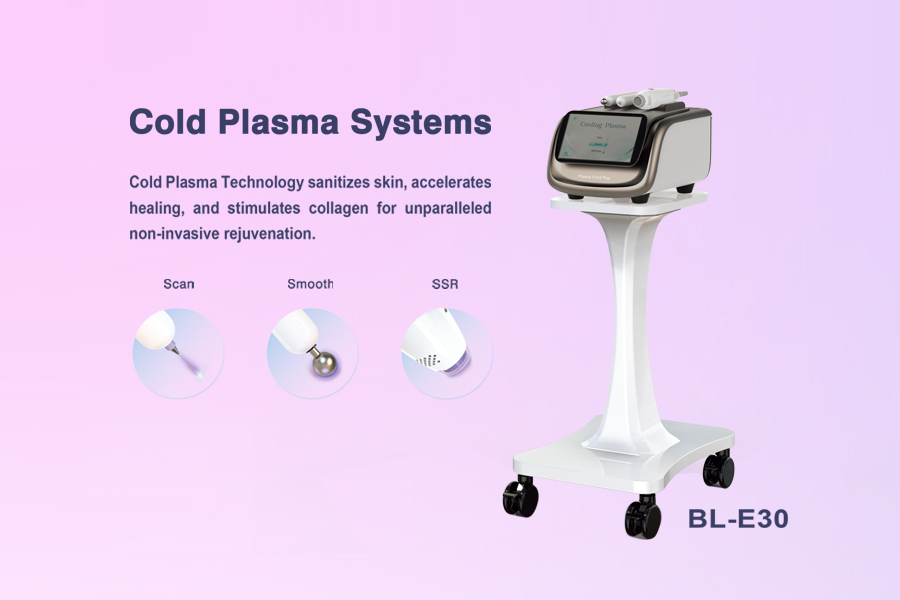
BILENS BL-E30 Cold Plasma: The Future of Non-Invasive Skin Rejuvenation
Introduction
The pursuit of youthful, radiant skin has driven continuous innovation in aesthetic medicine. While Ablative Lasers and surgical facelifts remain effective, their associated downtime and risks have fueled demand for non-invasive alternatives. Among the most promising emerging technologies is Cold Atmospheric Plasma (CAP) , a fourth state of matter that offers a novel approach to skin rejuvenation without breaking the skin barrier. The BILENS BL-E30 Cold Plasma system represents a significant advancement in this field, leveraging controlled plasma energy to stimulate the skin's natural regenerative processes.
Understanding Cold Plasma Technology
Plasma, often described as the fourth state of matter, is an ionized gas composed of electrons, ions, and neutral particles . Cold Atmospheric Plasma (CAP) distinguishes itself from thermal plasma by operating at or near body temperature, avoiding thermal damage to surrounding tissues . The BILENS BL-E30 utilizes this principle, generating a controlled plasma discharge that interacts with the skin suRface through reactive oxygen and nitrogen species (RONS) and localized thermal effects .
Unlike ablative lasers that vaporize tissue, CAP operates through a hormetic mechanism—a controlled, low-level stress that triggers beneficial cellular responses . This approach preserves the epidermal barrier while stimulating deeper dermal remodeling.
Mechanism of Action: From Energy to Collagen
The therapeutic effects of cold plasma are rooted in its interaction with dermal fibroblasts, the cells responsible for producing collagen and elastin. When plasma energy is applied to the skin surface, it generates reactive oxygen and nitrogen species that activate signaling pathways involved in wound healing and tissue regeneration .
Research demonstrates that cold plasma stimulates fibroblasts to increase production of type III collagen and elastin, while also promoting the expression of collagen I and fibronectin—key components of the extracellular matrix (ECM) . A 2022 study published in Lasers in Surgery and Medicine confirmed that low-intensity CAP induces a hormetic effect on ECM protein expression, leading to significant wrinkle reduction that persisted for at least four weeks post-treatment .
Furthermore, plasma energy enhances microcirculation and tissue oxygenation, creating an optimal environment for cellular repair and regeneration . The controlled thermal effect also promotes neocollagenesis—the formation of new collagen fibers—through activation of the wound healing cascade .
Clinical Evidence and Outcomes
Clinical research supports the efficacy of cold plasma for facial rejuvenation. A prospective cohort study of 40 women with mild-to-moderate facial aging demonstrated statistically significant improvements in the Fitzpatrick wrinkle scale, melanin index, erythema index, and skin elasticity at 4 and 12 weeks post-treatment . Notably, 60% of subjects reported greater than 75% improvement in dyspigmentation, while 50% and 57.5% reported comparable improvements in wrinkles and elasticity, respectively .
The BILENS BL-E30 builds upon this scientific foundation, delivering controlled plasma energy with precision and consistency. Its design allows for customizable treatment parameters, enabling practitioners to tailor therapy to individual skin types and concerns. The system is particularly effective for addressing:
-
Fine lines and wrinkles around the periorbital and perioral areas
-
Dyspigmentation and uneven skin tone
-
Skin laxity and loss of elasticity
-
Acne scars and textural irregularities
Safety and Recovery Profile
One of the most compelling advantages of cold plasma technology is its favorable safety profile. Unlike ablative procedures that remove the epidermis, CAP preserves the skin barrier, reducing the risk of infection and post-inflammatory hyperpigmentation . The treatment is suitable for all Fitzpatrick skin types, including darker phototypes that may be prone to complications with laser-based modalities .
Patients typically experience minimal downtime, with mild erythema resolving within days. A clinical study using a similar low-temperature plasma device reported no serious adverse events, with patients returning to normal activities immediately after treatment . The BILENS BL-E30 is designed to deliver these benefits with consistent, reproducible results, making it a valuable addition to any aesthetic practice.