

Cold Plasma Technology in Skin Tightening and Serum Infusion
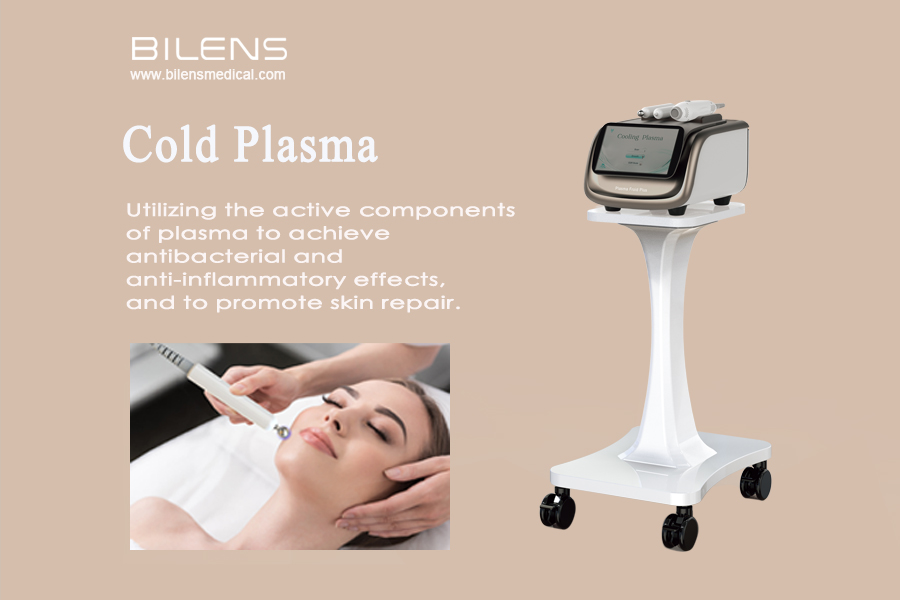
Cold Plasma Technology in Skin Tightening and Serum Infusion: Mechanisms, Evidence, and Regulatory Outlook
Abstract: Cold plasma, the fourth state of matter, has emerged as a distinctive modality in aesthetic dermatology and regenerative medicine. Unlike conventional thermal plasma, low-intensity cold plasma activates fibroblasts through hormesis, promotes collagen synthesis, and reversibly enhances skin barrier permeability, creating new possibilities for transdermal delivery of serum actives. This article systematically examines cold plasma technology across four dimensions—mechanism of action, tightening effects, serum infusion potential, and safety—tracing the clinical logic from "epidermal maintenance" to "supeRficial tightening," and discusses its alignment with MDSAP/ISO 13485 quality systems and FDA 510(k) regulatory pathways.
Keywords: cold plasma; Skin Tightening; serum infusion; reactive oxygen and nitrogen species; hormesis
I. From the "Fourth State" to the Skin Surface: The Foundation of Cold Plasma Action
Plasma is an ionized composed of ions, electrons, excited molecules, and free radicals, commonly referred to as the fourth state of matter. In dermatology, the clinically valuable form is "cold" atmospheric-pressure plasma—its macroscopic temperature approximates body temperature, causing no thermal injury, yet it triggers a series of controllable biological responses at the skin surface and in superficial tissues. The core mediators of these responses are reactive oxygen species (ROS) and reactive nitrogen species (RNS). When cold plasma contacts air and surface moisture on the skin, it generates nitric oxide, hydroxyl radicals, hydrogen peroxide, and other short-lived reactive molecules. These molecules are not merely "oxidative damage factors"—at low concentrations, they serve as cellular signaling messengers.
The skin is not an inert barrier. Fibroblasts in the dermis and keratinocytes in the epidermis both remain sensitive to redox signals in the microenvironment. After cold plasma acts on the skin, the most immediate visible response is a slight local temperature increase and transient erythema, arising from heat transfer and vasodilation. However, this response is reversible and fundamentally distinct from the tissue damage caused by truly high-energy plasma.
II. Tightening Mechanism: Hormesis and Collagen Neogenesis
The core mechanism by which cold plasma achieves "superficial tightening" lies in its hormetic effect on dermal fibroblasts. Hormesis refers to the phenomenon whereby a low-dose stressor activates intrinsic cellular protection and repair pathways. A 2022 study published in Lasers in Surgery and Medicine explicitly demonstrated that low-intensity cold atmospheric plasma induces extracellular matrix protein expression in dermal fibroblasts through this hormetic effect. Specifically, gene transcription and protein synthesis of collagen I, collagen III, and fibronectin are all upregulated.
Animal studies further corroborate this finding. In photoaging-induced wrinkle models, cold plasma-treated groups showed significant wrinkle reduction that persisted for at least four weeks, alongside markedly increased dermal collagen density. Another in vivo study published in Scientific Reports used a portable cold plasma device on rat skin; histological examination revealed elevated collagen levels, and epidermal thickness increased in the high-voltage treatment group, suggesting improved skin elasticity. Together, these findings point to one conclusion: cold plasma does not achieve tightening through an "ablate-and-rebuild" peeling model, but rather awakens the skin's own matrix synthesis capacity through signal modulation.
This pathway aligns closely with the application scenario described—"dynamic wrinkles, serum infusion, epidermal maintenance, and superficial tightening." Compared with botulinum toxin's chemical inhibition of muscle movement, cold plasma targets biological improvement of skin texture and dermal structure, positioning itself more as "regenerative maintenance" than "paralytic modification."
III. Serum Infusion: A Delivery Window Created by Reversible Barrier Modulation
The term "serum infusion" implies cold plasma's potential role in transdermal drug delivery. The stratum corneum, the skin's outermost layer, is a lipophilic barrier that typically permits only small molecules of moderate lipophilicity to pass. Cold plasma's modulation of the skin barrier offers new possibilities for the penetration of hydrophilic or macromolecular actives.
Mechanistically, cold plasma temporarily alters stratum corneum lipid organization and intercorneocyte connections through "plasma poration," increasing skin permeability without causing visible damage. A 2026 study published in Free Radical Biology and Medicine used electron paramagnetic resonance spectroscopy to directly measure radical formation in skin after plasma treatment, providing the first quantitative confirmation that reactive species can penetrate to a certain depth within the skin. More notably, the study found that even with alginate dressings or adhesive bandages interposed, plasma still induced radical formation in the skin—meaning that if serum or essence is applied before plasma treatment, its actives may achieve enhanced penetration through this permeability window.
It must be emphasized that the durability and reproducibility of this "infusion" effect still require more clinical data. Most evidence comes from in vitro skin models and animal experiments; human clinical studies on transdermal delivery efficiency remain at an early stage. Nevertheless, the direction is clear: cold plasma offers a physical, chemical-free adjunct for "needle-free infusion."
IV. Safety and the Therapeutic Window: Low Intensity Is Key
Any intervention involving reactive species must answer safety questions. The safety boundary of cold plasma in dermatological applications depends on three parameters: energy output, treatment duration, and gas type. A 2025 porcine model study compared the thermal effects and pathological changes of helium and argon at different output energies, concluding that at low output energy settings, skin shows only mild superficial peeling without tissue damage; at high output energy, erythema, coagulation, and even erosion occur. Under equivalent conditions, argon produces more significant heat and pathological changes than helium. This means gas selection and energy calibration are prerequisites for safe application.
Clinical safety data are equally reassuring. A randomized controlled double-blind trial for mild-to-moderate Acne showed that the cold plasma treatment group had a lower incidence of adverse events (burning, itching, erythema) than the control drug group, all mild and transient, with no subject withdrawals. Radical measurement studies confirm at the molecular level that, at recommended parameters, cold plasma does not cause skin DNA damage or persistent impairment of barrier function.
Conclusion
Cold plasma technology offers a biological pathway for skin tightening and active ingredient delivery that is distinct from lasers, radiofrequency, and chemical peeling. Its hormesis-driven collagen neogenesis mechanism and reversible barrier modulation position it in a unique ecological niche within the continuous application logic of "epidermal maintenance–superficial tightening–serum infusion." For devices already holding MDSAP/ISO 13485 quality systems and FDA 510(k) clearance, the clinical evidence chain for cold plasma technology—including in vitro mechanistic studies, animal model validation, and preliminary human safety data—is progressively maturing. The next critical step is to conduct standardized clinical endpoint studies for specific indications (such as periorbital dynamic wrinkles) to further solidify its evidence tier within regulatory frameworks such as Australia's TGA.