

The 1550 nm erbium-glass and 1927 nm thulium fiber
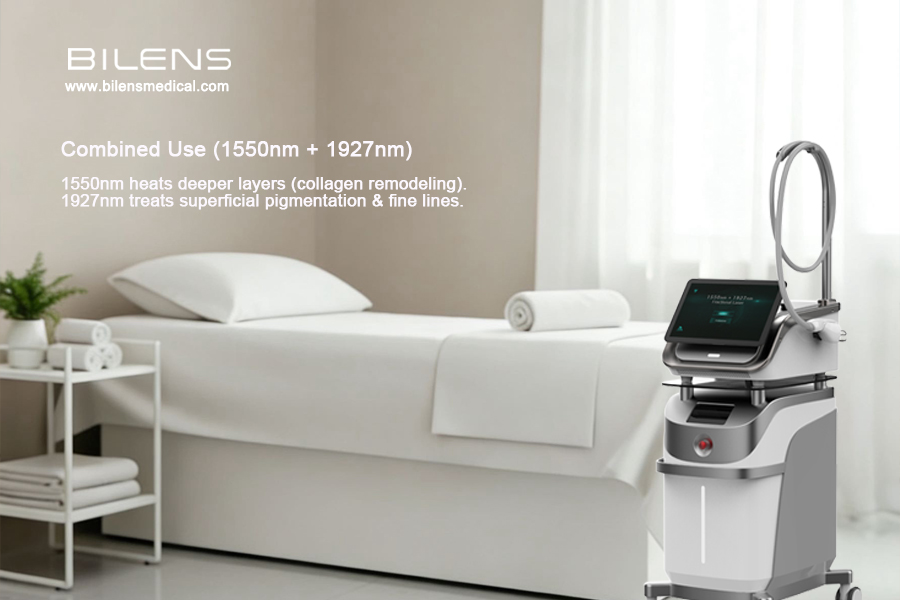
The BL-K20 Dual-Wavelength Laser Platform: Integrating 1550 nm and 1927 nm for Versatile Skin Resurfacing
Introduction
The BL-K20, manufactured by BILENS,is a fractional Fiber Laser system that combines two distinct wavelengths—1550 nm and 1927 nm—within a single medical device platform. This dual-wavelength configuration is not merely a matter of hardware convenience; it reflects a deliberate therapeutic strategy. The two wavelengths exhibit different absorption characteristics in tissue water, which translates into complementary clinical effects. By housing both sources in one system, the BL-K20 aims to address a spectrum of dermatological concerns, from textural scarring and fine lines to dyschromia and acne vulgaris, with a degree of flexibility that single-wavelength devices cannot match .
Mechanistic Rationale
The clinical logic of the 1550/1927 nm pairing rests on the physics of water absorption. The 1550 nm erbium-glass fiber laser is a non-ablative fractional modality. Its energy is absorbed by tissue water, creating columns of controlled thermal injury—microthermal treatment zones—while leaving the stratum corneum largely intact. This triggers a wound-healing cascade that promotes neocollagenesis and epidermal remodeling over weeks to months. The 1927 nm thulium fiber laser, by contrast, has a significantly higher water absorption coefficient. At comparable pulse energies, it can produce more superficial, yet more intense, epidermal effects that may range from non-ablative coagulation to frank ablation, depending on the settings used . In practical terms, 1550 nm excels at dermal remodeling for fine lines and scars, whereas 1927 nm is particularly suited to epidermal pigment removal and textural refinement .
Clinical Applications and Evidence
Peer-reviewed literature has begun to characterize the combined use of these wavelengths. A 2025 review in Lasers in Surgery and Medicine synthesized current evidence and expert consensus on the dual 1550/1927 nm system, noting that the 1550 nm wavelength effectively targets dyschromia, fine lines, and various scar types, while the 1927 nm wavelength specifically addresses actinic keratoses, dyschromia, and pigmented lesions . The same review emphasized that standardized protocols exist but that personalized treatment—adjusted for treatment area and Fitzpatrick skin type—remains essential .
The BL-K20’s indication profile mirrors these findings. The manufacturer lists mild-to-moderate skin laxity, scars, aging skin rejuvenation, and acne vulgaris as target conditions . Independent research on the 1927 nm thulium laser alone supports its utility in acne treatment. A case series of Korean patients with Fitzpatrick skin types III and IV reported clinical improvement in both inflammatory and noninflammatory acne lesions following serial 1927 nm fractional treatments, with a manageable safety profile . For skin of color more broadly, a 2026 review examining the dual 1550/1927 nm system concluded that it is safe and effective when appropriate parameters are selected, though postinflammatory hyperpigmentation remains a consideration requiring vigilance .
Practical Considerations
The BL-K20’s value lies in the ability to select wavelength according to clinical need within a single treatment session or across a treatment course. A patient with photoaged skin and lentigines might receive 1927 nm passes for epidermal pigment clearance, followed by 1550 nm passes for dermal collagen stimulation. A patient with atrophic acne scars, by contrast, might benefit primarily from the deeper dermal effects of 1550 nm. This adaptability positions the device as a versatile tool in aesthetic medicine, particularly as the field moves toward individualized, multi-target approaches to skin aging .
Conclusion
The BL-K20 represents a pragmatic convergence of two well-characterized laser wavelengths. The 1550 nm erbium-glass and 1927 nm thulium fiber sources offer distinct but complementary tissue interactions, and their integration into one platform allows clinicians to tailor treatment to the specific pathophysiology of each patient’s skin. While the device is not a panacea—appropriate patient selection, parameter customization, and attention to skin type remain paramount—the BL-K20 fills a useful niche for practices seeking comprehensive fractional resurfacing capability without committing to separate single-wavelength systems. As evidence continues to accumulate regarding optimal sequencing and combination protocols, the dual-wavelength approach embodied by this platform is likely to remain a relevant and practical option in dermatologic laser practice.