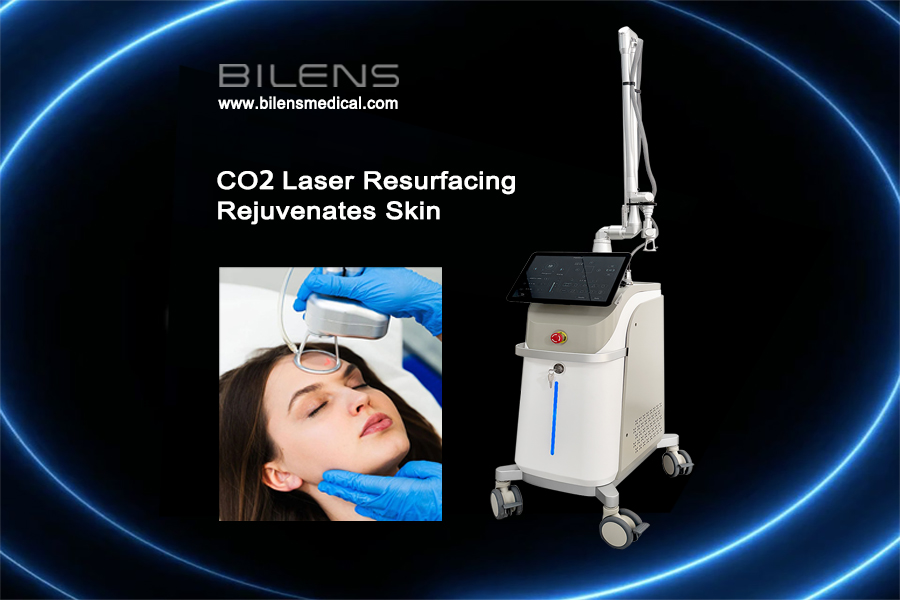

The BILENS BL-B10 and FDA 510(k) K263195: What a Clearance Actually Means for a CO2 Fractional Laser
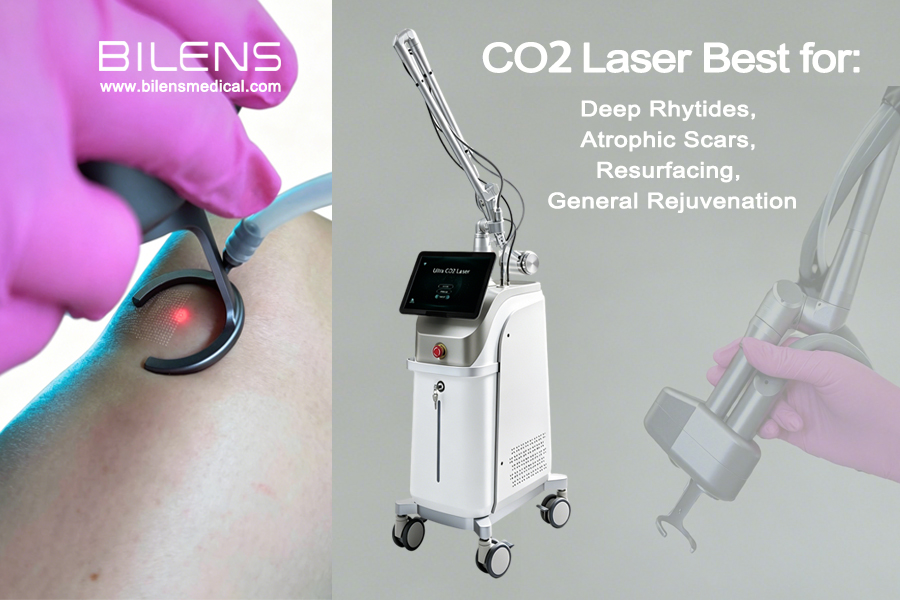
The BILENS BL-B10 and FDA 510(k) K263195: What a Clearance Actually Means for a CO2 Fractional Laser
In the aesthetic device market, the phrase “FDA cleared” carries enormous weight—and equally enormous potential for misinterpretation. When a manufacturer references a specific 510(k) number such as K263195 for a CO2 fractional laser like the BILENS BL-B10, the claim is both precise and narrow. Understanding what that clearance does and does not signify is essential for clinicians, distributors, and patients alike.
A 510(k) premarket notification is the regulatory pathway by which a device demonstrates “substantial equivalence” to a legally marketed predicate device. It is not an approval in the sense of a rigorous new-drug application or a Class III PMA. For a CO2 fractional laser, the relevant product code is typically GEX—Powered Laser Surgical Instrument—regulated under 21 CFR 878.4810 for general and plastic surgery . The clearance confirms that the device’s intended use, technological characteristics, and safety profile are sufficiently similar to a predicate that it may be marketed lawfully.
The BILENS brand is associated with Shanghai Bele Medical Technology Co., Ltd., a manufacturer with multiple FDA submissions. Public FDA records show a related submission, K240386, for a picosecond Nd:YAG laser system (BL-C10), cleared in May 2024 . Another Bilens device, the BL-M10, appears in the Global Unique Device Identification Database as a multi-modality skin suRface treatment system with product codes GEX and ONF . These records establish the company’s regulatory footprint but do not, in themselves, validate the specific claims made about K263195 or the BL-B10.
This is the critical distinction. A 510(k) number is a unique identifier for a specific submission. It cannot be inferred from adjacent clearances, and it cannot be substituted with a different device’s number. If K263195 is cited for the BL-B10, the appropriate diligence is to retrieve that exact record from the FDA’s 510(k) database and confirm three things: the device name matches, the applicant matches, and the intended use described in the clearance aligns with the marketing claims being made. A mismatch—whether intentional or careless—transforms a regulatory fact into a promotional liability.
For a CO2 fractional laser specifically, the intended use statement matters enormously. These devices are cleared for ablative and non-ablative resurfacing, treatment of scars, wrinkles, and certain pigmented lesions, depending on the specific clearance. They are not cleared for “permanent” results, “painless” treatment, or “zero downtime”—phrases that appear frequently in social media advertising and invite regulatory scrutiny. The 510(k) clearance defines the boundary of lawful promotion. Anything beyond that boundary is off-label marketing, regardless of how clinically plausible it may sound.
From a clinical perspective, the value of a 510(k)-cleared CO2 fractional laser lies in its predictability. The fractional photothermolysis principle—creating columns of controlled thermal injury surrounded by viable tissue—is well established. A cleared device has demonstrated to the FDA that its energy delivery, pulse duration, and safety mechanisms are comparable to a predicate that has already been marketed. This does not guarantee superior outcomes, but it does provide a baseline of regulatory accountability. The physician still bears responsibility for patient selection, parameter setting, and post-treatment care.
For distributors and clinic owners evaluating the BL-B10, the practical takeaway is straightforward: verify the clearance directly. The FDA’s 510(k) database is public and searchable by number. A legitimate clearance record will show the device name, applicant, decision date, and decision summary. If the record exists and the details align, the device has met the regulatory threshold for marketing in the United States. If it does not, no amount of branding or adjacent clearances can fill that gap.
The BILENS BL-B10, if properly cleared under K263195, represents one of many CO2 fractional platforms competing in a crowded market. Its regulatory status is a necessary credential, not a differentiator. The real questions for buyers and users are clinical: Does the device offer adequate parameter control? Is the handpiece compatible with the intended treatment protocols? What is the service and training infrastructure in the target market? These questions determine whether a cleared device becomes a useful tool or an expensive paperweight.
In an era of increasingly sophisticated aesthetic marketing, the 510(k) number is a fact. The interpretation of that fact is where diligence begins.